
Digital Junkfood on Social Media: To Each Their Own Poison
Authors: Eelco Herder, Jouke Staring
Source attribution: Publisher HTML for DOI: 10.1145/3648188.3678163, cross-checked against the supplied ACM PDF.
Abstract
Social media platforms are designed in a way that keeps users engaged and occupied for as long as possible, by means of various user interface design elements and personalization techniques. A known problem with these techniques is that they may cause compulsive behavior and feelings of regret because of the time they wasted. However, as users continue to engage with content that researchers have identified as problematic, the overall experience cannot always be that negative. To shed light on this apparent paradox, this study investigates the subjective perceptions of users and provide a constructivist perspective of what we call ‘digital junkfood’. We identified a rich variety of relevant content elements, evoked feelings and behavioral responses. The often conflicting positive, neutral and negative feelings and responses elicited by digital junkfood call for differentiated, individualized rather than normative approaches towards compulsive social media use and the personalization techniques associated with this behavior.
CCS Concepts
• Security and privacy → Social aspects of security and privacy ; • Human-centered computing → Empirical studies in collaborative and social computing ; Interaction design theory, concepts and paradigms;
Keywords
digital junkfood , social media addiction , compulsive social media behavior
ACM Reference Format
Eelco Herder and Jouke Staring. 2024. Digital Junkfood on Social Media: To Each Their Own Poison. In 35th ACM Conference on Hypertext and Social Media (HT '24), September 10--13, 2024, Poznan, Poland. ACM, New York, NY, USA 10 Pages. https://doi.org/10.1145/3648188.3678163
1 INTRODUCTION
The act of consuming edible junk food, such as crisps or pizza, can evoke a range of feelings between individuals. There are times when a person finds it difficult to resist indulging in junk food, while on other occasions, it becomes easier for them to abstain from it. The experience of consuming junk food can be thoroughly enjoyable at one moment, while at another, the person might start questioning why they are consuming this type of food.
Similar to the diverse range of feelings and perceptions associated with consuming edible junk food, consuming certain content on social media can evoke similar experiences [24]. The experience and outcome of consuming content may be perceived as (mentally) healthy or unhealthy, potentially influenced by the content that is being consumed, as a user puts their time and energy into this activity. Drawing parallels between the consumption of edible junk food and the consumption of content on social media, we employ the term ’Digital Junkfood’ to encompass content that exhibits similar characteristics and effects as edible junk food.
Users often find themselves spending excessive amounts of time on social media, even if they don't perceive it as an addiction [18]. Therefore, understanding the impact of Digital Junkfood on social media use is valuable, not only for preventing social media addiction but also for mitigating compulsive use based on the insights provided by this study.
Studies in this research area often overlook the diverse conditions that exist on smartphones and incorrectly assume uniformity across all users [26]. Particularly, it is often implicitly assumed that ‘wasting’ time on social media is inherently wrong and should be avoided at all times. However, similar to edible junk food, Digital Junkfood is designed to be easily digestible and attractive, in order to be selected, watched or rated. Furthermore, as users have been observed to engage in various types of compulsive social media behavior [16], the overall experience of users with such online content cannot always be that negative.
Therefore, this study aims to classify various types of content that users perceive to be Digital Junkfood on social media, as well as their experiences during the interaction and their feelings afterwards. We are interested in the different types of digital content and the topics that raise a user's attention, and which experiences lead to feelings of satisfaction or disappointment.
This paper is structured as follows. After the literature review in Section 2, the research methodology is outlined in Section 3, which involves employing surveys and semi-structured interviews as data collection methods to gather insights into users’ perceptions and experiences with Digital Junkfood. The quantitative and qualitative results will then be presented in Section 4, accompanied with diverse descriptions of how participants perceive and experience Digital Junkfood. Finally, the discussion and conclusion sections will analyze the study's results and serve to provide an overall understanding of the constructivist definition of Digital Junkfood.
2 RELATED WORK
Over the past decade, there has been a significant increase in the amount of time people spend using their smartphones. As the amount of time spent on smartphones has risen, concerns have grown over whether this time is being used effectively and does not lead to regretful use [23]. Individuals who are addicted to social media may feel regret after using it, but even those who are not addicted can still experience regret after engaging on social media [6, 13, 25].
Numerous researchers have employed various terms to describe Internet addiction, including digital media compulsion, virtual addiction, and Internet abuse [11]. Andreassen and Pallesen [24] define addiction in the context of Internet use as: "Being overly concerned about online activities, driven by an uncontrollable motivation to perform the behavior, and devoting so much time and effort to it that it impairs other important life areas.". Internet addiction is classified as a behavioral addiction, but also exhibits similarities with substance addictions, as both types of addiction share some common characteristics. Besides, Internet addiction also has its own distinct characteristics, compared to other addictions [11].
Prior to the year of 2000, research on Internet addiction primarily focused on general Internet usage. However, in recent years, the focus has shifted to treating the Internet as a platform for various independent activities. This shift in approach suggests that online content and activities are more significant factors in addiction than the medium itself [21]. Griffiths [12] has argued that there is also a difference between being addicted to the Internet and being addicted on the Internet.
Social media offer many different types of content, with many different reasons for engaging with it. A user may be triggered by videos related to a personal hobby, news headlines that appear alarming, gossips about celebrities and many other items – we will investigate this in more detail in Section 4.2. Theoretically, it is up to the user to decide whether to engage with an item or not, the platform merely provides a choice architecture [5].
There are many behavioral theories on how users make such decisions, most notably the theory of bounded rationality [15], which describes how users navigate between routine behavior and conscious decision making. In this paper, we mainly focus on the choice architecture itself and actual user responses, without making assumptions on their motivational drivers.
According to [22], the current interface of various social media platforms consist of so-called attention-capture dark patterns [10]. These dark patterns are features that have three principles in common. The first principle is that it takes away a person from their focused goal at a given time, thereby compromising their independence. Secondly, it causes a person to feel a disconnection with time and a lack of control. Finally, it results in a person feeling regretful about the time spent on the service in hindsight.
Compulsive social media use has been negatively associated with various personality traits. Aladwani et al [1] have indicated that self-esteem has a significant negative influence on compulsive social media use while interaction anxiousness is significant positive related to compulsive social media use. Additionally, [2] found that social interaction anxiety increases compulsive social media use through fear of rejection and fear of negative evaluation, with the latter being the strongest predictor. Ali et al [19] examined life satisfaction in relationship to compulsive social media use where it was found that loneliness is triggered when users excessively engage on social media.
In summary, a lot of research has already been performed on related topics to Digital Junkfood, such as compulsive social media use and social media addiction. This provides valuable information when and how users could experience feelings, such as regret, related to social media content. These feelings are most of the time linked to external factors, such as demographic and (inter)personality variables. These studies, however, overlook how these feelings conceivably are caused by specific digital content. It is important to consider this, as every user engages with different content in different ways, which might lead to various outcomes of feelings and other consequences, such as addiction.
3 METHODOLOGY
An exploratory study was conducted to examine the constructivist definition of Digital Junkfood. The objective of the study was to enable individuals to subjectively identify the social media content that they considered as Digital Junkfood, as this could vary between different users.
During the study, participants were instructed to review their past engagements on a specific platform in order to identify content that they considered as Digital Junkfood. To assist them in this process, participants had access to a review tool that displayed their history of content engagement. Once the participant identified a post as Digital Junkfood, they were asked to complete a survey consisting of six questions and participate in a semi-structured interview. The collected data included insights into the characteristics of content perceived as Digital Junkfood, the feelings evoked by Digital Junkfood, and how users act towards Digital Junkfood.
3.1 Participants
A sample of 30 participants was recruited for the experiment to ensure a certain level of statistical power regarding the outcome of the study. The most important requirement during participant recruitment was that they used at least one of the six included social media platforms (Instagram, Facebook, YouTube, TikTok, Reddit, LinkedIn) at least once a week. The primary recruitment method involved convenience sampling.
The participants were selected from a diverse pool of users with various demographic characteristics, including gender, age, and education level, to ensure that the findings were representative of a broad range of social media users. The study focused exclusively on Dutch participants, as conducting the study in their native language would also create a more comfortable environment for them to explain their thoughts and opinions. All participants were 18 years or older, considering that different social media platforms provide limited or no access for users below the age of 18 [20].
3.2 Materials
The study mostly took place in the home or work environment of the participants. However, if that was not possible, the study was conducted in an alternative environment agreed upon by both parties, where the participant felt comfortable and had sufficient privacy to review their history of social media activity. The participants were given the option to choose between their personal smartphones or laptops to review their social media activity.
The participants received instructional videos on a separate laptop, helping them understand how to use the various review tools that allowed them to access their history of content engagement on the selected social media platform1. The instructional videos demonstrated the activity tool through screen recordings and provided explanations of the types of activity data (e.g., liked posts, watched videos, etc.) that could be analyzed.
3.3 Procedure
The study commenced with the introduction of the concept of Digital Junkfood, by describing different scenarios where various feelings can typically emerge when one encounters edible junk food. Following that, participants were informed that different opinions exist regarding what food is considered as edible junk food. The relationship between edible junk food and Digital Junkfood was then explained, emphasizing that engaging with certain content on social media, identified as Digital Junkfood, can evoke similar feelings as consuming edible junk food. It was also highlighted that different users may have varying perceptions of what content is seen as Digital Junkfood.
The participants were introduced to the tasks they had to perform, which involved searching through content they had engaged with in the past and identifying it as Digital Junkfood. They were asked to choose the social media platforms they wanted to use for the study. Subsequently, the relevant instructional videos were shown, while the participant was free to explore the tool using their own device to become acquainted with it.
Once the participant had found a post that they considered as Digital Junkfood, they filled out six questions that were about the content they selected and perceived as Digital Junkfood. This process was repeated with other posts until the participant felt that they had found all the Digital Junkfood they were able to find. The survey was handed out in paper format, as it provided the most convenient method while interacting with their own devices. The survey also contained demographic questions regarding gender and age.
Subsequently, a semi-structured interview with the participant was conducted, concerning the content they had designated as Digital Junkfood. The first section of the interview involved questions about the subject and sentiment of the content that was selected by the participant. In the second part of the interview, the participant was asked to describe what they thought were the motives from the publisher to publish the selected content, as well as the feelings they experienced when reflecting on their engagement with the content. Once all the questions had been addressed, the participant was thanked for their participation. Finally, they were given the opportunity to share any comments.
3.4 Privacy concerns
Once the methodological procedure was established, a mandatory ethics and privacy Quick Scan was completed for the defined process. The results indicated that the methodological procedure did not raise any significant concerns.
As social media posts may contain personal data, we recommended participants to search for content that they would feel comfortable to discuss. Further, they were assured that they would not be obligated to respond to any questions that they did not feel comfortable answering. Furthermore, the researchers did not view the screen of the participant's device. This precaution ensured that the participant did not unintentionally disclose any confidential information.
Participants were informed about the purpose of the experiment and how their data would be used. They were given the opportunity to ask questions and withdraw from the study at any time. The researchers obtained informed consent from the participants before collecting any data. Finally, the data collected was anonymized before analysis to protect the privacy of the participant.
3.5 Data preparation and processing
The survey data was manually entered into a spreadsheet. The demographic information was organized on a per-participant basis, while the content-related answers were recorded on a per-response basis. Once all the data was collected, it was put into Jupiter Notebook where with the use of Pandas bar graphs were created for each question.
The recorded audio from each interview was automatically transcribed in Microsoft Word. However, due to potential inaccuracies in the automatic transcription, the transcribed text was manually checked by listening to the interview audio and correcting any significant errors in the transcribed text. Subsequently, the data was imported into Nvivo for coding the interview answers. The data processing involved applying the three coding steps of grounded theory [8].
First, open coding was conducted for each question, assigning tentative labels to chunks of answers that summarized the answer being described by the participant. Next, axial coding was performed to explore the relevant relationships between the codes. This process revealed that perceptions, subjects, feelings, and behaviors related to Digital Junkfood could be further categorized, as certain answers overlapped in terms of their purport. Finally, through the process of selective coding, the identified categories were analyzed to determine the core fundamentals that define Digital Junkfood in a constructivist way.
4 RESULTS
The results of the study are presented in this section. First, the quantitative results are presented, which were mostly obtained from the participants’ responses to the survey. Next, the qualitative results deriving from the conducted interviews are discussed and analyzed.
4.1 Quantitative results
The study consisted of a total of 30 participants, all of whom provided valid quantitative results through their survey responses. 14 (47%) identified as men, while 16 (53%) identified as women. None of the participants identified as non-binary or preferred not to disclose their gender. The most common age group among the participants was 18-24 years old, with 15 participants. The age groups with the lowest number of participants were 35-44 and 45-54 years old, with two participants each.
Each participant completed the whole survey consisting of six questions, resulting in a total of 132 responses regarding identified Digital Junkfood posts. However, there were three participants who filled out the survey four times for platforms (Twitter, Pinterest, and Snapchat) that were not included in the study. Consequently, these four responses were excluded from the collected data, bringing the total number of valid responses to 128. On average, participants were able to identify approximately 4-5 Digital Junkfood posts throughout the duration of the study.
Among the participants, YouTube had the highest number of active users, with 28 out of 30 participants using the platform. Instagram and LinkedIn followed with 22 active users each. Reddit had the fewest active users, with only 4 out of 30 participants using the platform.
4.1.1 Digital Junkfood perceived by users per platform. Figure 1 represents the normalized number of active users who identified Digital Junkfood for each platform. To calculate these results, the number of participants who found content they had previously interacted with and perceived as Digital Junkfood per platform was divided by the total number of active users per social media platform.
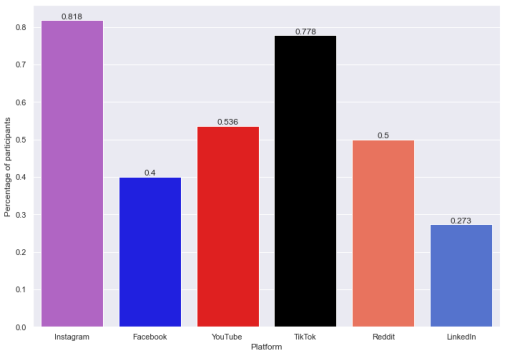
Figure 1: The normalized number of active users per platform who have identified content as Digital Junkfood.
Instagram emerged as the platform with the highest number of active users in the experiment who were able to identify one or more posts as Digital Junkfood, closely followed by TikTok. The content covered a wide range of topics, including product advertisements, comedic posts, food-related content, celebrity-related content, and more.
LinkedIn, being perceived by most participants as a professionally-oriented platform, resulted in most users not identifying any content as Digital Junkfood. The small number of Digital Junkfood encountered by LinkedIn users included personal success stories, advertised courses, recruiters sending mass messages to multiple users, and political statements that participants felt did not belong on LinkedIn. Another participant mentioned that receiving annual job anniversary congratulations from connections felt like Digital Junkfood, as it gave the impression that most people reaching out wanted something from them.
4.1.2 Digital Junkfood posts per type of content. Figure 2 presents the distribution of Digital Junkfood posts per type of content (Text, Image, Video) selected by participants in the experiment. The majority of the identified posts, totaling 83 items, were in the form of solely a video. There were relatively fewer posts that consisted of a different content type, with images being the second most common at 25 items. Only a few posts contained a mix of different content types.
Overall, participants identified 86 Digital Junkfood items that consist of a video, 36 items containing one or more images, and 19 items consisting of text. Examples of videos that were considered Digital Junkfood included vlogs, advertisements, comedy, and DIY tutorials. Images often featured photos regarding food, celebrities, influencers and life style. Text-based content primarily comprised personal stories or descriptions related to a video or image.
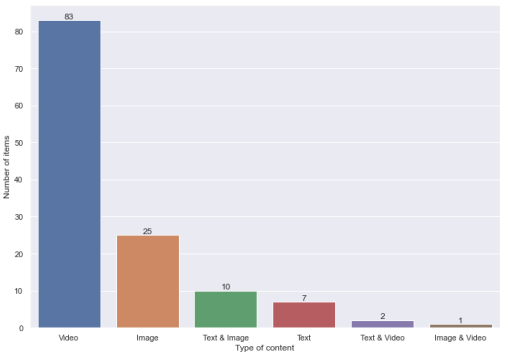
Figure 2: The number of Digital Junkfood posts per content type that were identified by users.
4.1.3 Sponsored posts and clickbait. The majority of Digital Junkfood posts (111 items) were not recognized as sponsored by the participants. It is possible that within these 111 items, some posts may have been sponsored but went unnoticed by the users. The 17 items that were perceived as sponsored posts were primarily seen as advertisements that appeared before the start of a video or as sponsored posts intermixed with their followed content while scrolling through their timeline. Users were less likely to identify sponsored posts by influencers, possibly because it is generally less evident that these posts are sponsored by a third-party brand.
The majority of Digital Junkfood posts were found to be published by accounts whom the participants did not personally know. These accounts belonged to celebrities, influencers, organizations, or impersonal profiles.
A majority of participants reported experiencing clickbait in their engagement with Digital Junkfood. Most examples provided by participants originated from YouTube, where misleading video titles or thumbnails were present. Some users mentioned that clickbait is not prevalent on TikTok, as the platform automatically plays suggested videos. However, other participants noted that while watching TikTok videos, initial expectations were often set at the start of a video but not fulfilled by the end of the video, which they also considered to be clickbait. On Instagram, participants identified clickbait in the form of pictures leading to curiosity. Additionally, one participant mentioned that LinkedIn posts related to job applications created the expectation of finding a dream job even though each candidate has different requirements to apply for a job.
4.1.4 Time spent on Digital Junkfood posts per platform. Figure 3 illustrates the average duration spent by participants on Digital Junkfood posts across different platforms. Participants reported spending the most time on Digital Junkfood posts on YouTube, which can be attributed to the platform's longer videos, such as livestreams and TV episodes, in addition to shorter videos on the YouTube Shorts page. Conversely, participants spent the least amount of time per post on TikTok, given its emphasis on short-form videos.
LinkedIn, known for posts with more text and links, such as personal stories and job applications, had a higher average time spent compared to platforms like Instagram and TikTok, which predominantly focus on images and short videos. Participants reported experiencing varying durations on Facebook and Reddit, as the types of content on these platforms vary widely.
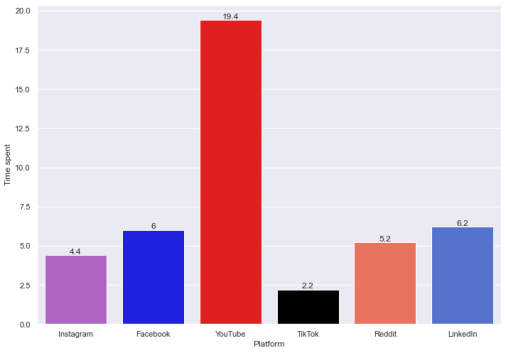
Figure 3: The distribution of time spent (in minutes) on a Digital Junkfood post per platform.
4.2 Qualitative results
All 30 participants in the semi-structured interview provided valid responses to the list of questions, ensuring the integrity of the qualitative results. The aim of gathering qualitative data through interviews was to investigate the reasoning behind users’ classification of certain content as Digital Junkfood.
4.2.1 Topics mentioned regarding Digital Junkfood content. Figure 4 portrays all the topics that were mentioned in the interview when participants talked about their experiences with selected Digital Junkfood posts.
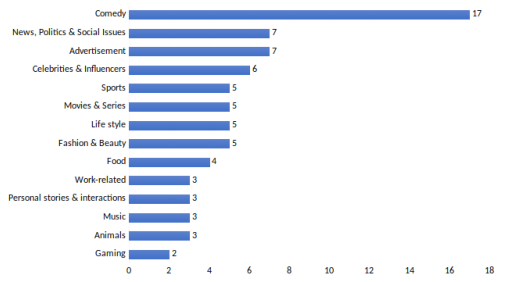
Figure 4: The distribution of topics that were mentioned by users regarding Digital Junkfood content.
The participants selected content related to various forms of comedy (sketches, fail compilations, etc.) as the most prominent type of Digital Junkfood, with 17 out of 30 participants discussing this category. Participant 17 gave the following example regarding comedy content: "I watch content creators that are interviewing people on the street and asking funny and weird questions. I like to see how people react to those kind of questions.".
Additionally, topics such as Advertisement (e.g., non-skippable ads, sponsored posts in a user's timeline) and News, Politics & Social Issues (e.g., uninteresting news articles, podcast clips about social issues) were frequently mentioned by seven participants during the interview. Participant 21 gave a relatively less obvious example regarding advertisements where they described the following: "I encounter people selling themselves on LinkedIn to find a new job or when a business person is trying to sell their course, which I see in both instances as advertisements.".
Celebrities & Influencers encompassed mostly vlogs, interviews, and gossip, while Fashion & Beauty primarily included tutorials on dressing up and applying makeup. Lifestyle content covered for the most part astrology, DIY tutorials, and life-related quotes. Participant 23 gave the example of gardening tutorials: "I watch YouTube videos from a Japanese man who lives in England who loves bonsai trees. He explains sometimes ten times what kind of gardening tools he has and how to use it. It is kind of adorable.".
Movies & Series focused on trailers and specific scenes from films or TV shows. Sports content consisted mainly of match highlights and stunts. Participant 8 gave the following example: "There was someone on a motor who drove really fast through a tricky landscape which was pretty dangerous.". Food content revolved around recipes and visually appealing food-related aesthetics. Animals content included cute or funny content featuring animals. Music content featured festivals, music-making tutorials, and specific songs. Personal stories & interactions encompassed shared personal experiences and any form of interaction (e.g., congratulating someone) on social media. Work-related topics involved subjects related to participants’ professions, such as educational material for teachers or tutorials on AI for programmers. Lastly, Gaming content included streamers playing specific games and tutorials on how to overcome challenging levels.
4.2.2 Feelings during the engagement with Digital Junkfood content. Figure 5 demonstrates what participants mentioned when they talked about their feelings during the engagement with the selected Digital Junkfood posts and past experience regarding Digital Junkfood. This bar graph specifically focuses on the feelings experienced during engagement with Digital Junkfood, whereas Section 4.2.3 delves into the feelings evoked after engagement.
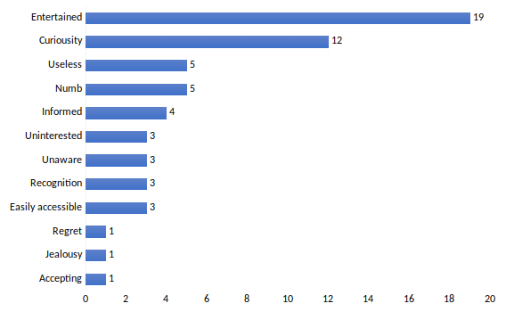
Figure 5: The distribution of the feelings that users experienced when engaging with Digital Junkfood content.
The feelings during the engagement with Digital Junkfood varied between the participants from negative, neutral, and positive feelings. Nevertheless, the majority of participants reported predominantly positive feelings during their engagement with Digital Junkfood content.
Most participants mentioned positive feelings during the engagement with Digital Junkfood. Participants reported experiencing feelings of entertainment, being informed, and a sense of recognition or relatable when engaging with certain Digital Junkfood posts. Additionally, many users found the Digital Junkfood content easily accessible, as it was often suggested to them by the platform's algorithm, requiring minimal effort to consume.
Furthermore, participants expressed a sense of curiosity while consuming Digital Junkfood. This curiosity could arise from the initial impression of the post, captivating the user's interest and leading them to fully engage with the content. Participant 13 explained the following: "It gives me the feeling of curiosity because I want to watch the video until the end to see what will happen and how it ends.". For other users, Digital Junkfood could also spark curiosity to explore more similar content.
Negative feelings, such as feeling useless, regret, uninterested, and jealousy were mentioned as well. The feelings of useless and regret primarily stem from the realization during the engagement that the user invested excessive time and energy in consuming Digital Junkfood content. Participant 1 said: "Sometimes I realize that I should do something more useful when scrolling through certain content. I think to myself that I should go off my phone and get up to do something like cleaning for example.". The user feeling of being uninterested arises when the initial impression of the content appears intriguing, but as the user engages with it, they realize it does not capture their genuine interest.
Further, neutral feelings like numbness, unawareness or accepting were shared. The feeling of numbness arose from the content having neither a positive nor negative impact on the user. Participant 2 described it as: "I think the content is Digital Junkfood for me, when it does not give me any specific feelings or any degree of satisfaction. There is an abundance amount of this type of content which causes to not giving me any feelings about the content.". Participant 28 argues their feelings of acceptance in the following way: "Well it is just part of the Internet. When you watch the content it gives you the impression that it provides you with conveniences as if a world opened up for you but in reality there is always a price tag attached to it in different forms. At the end it is just a business model.".
4.2.3 Feelings after the engagement with Digital Junkfood content. Figure 6 displays what participants mentioned when they discussed their feelings after the engagement with the selected Digital Junkfood posts. The feelings after the engagement with Digital Junkfood also varied between the participants from negative, neutral, and positive feelings. However, the prevailing sentiment expressed by the majority of participants was negative.
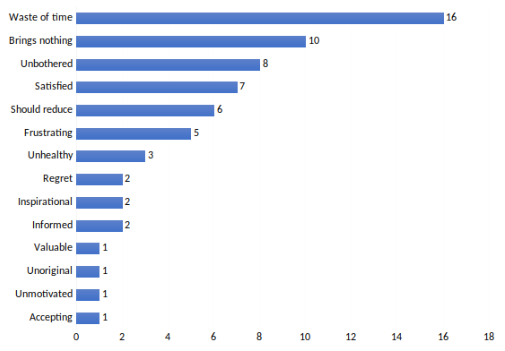
Figure 6: The distribution of the feelings that users experienced after engaging with Digital Junkfood content.
Positive feelings, such as feeling inspirational, valuable, informed, and satisfied, were mentioned. The feeling of satisfaction was mostly due to the content bringing the participant joy when consuming the content which left the user with a satisfied feeling. Participant 16 described their inspirational experience with Digital Junkfood as: "These Do It Yourself videos might come in handy in the future when I apply them. Or it could be a good investment as it may inspire me for other chores even though it is for me not valuable at the moment.".
Neutral feelings like unbothered or accepting were shared by users as well. Those feelings were caused as looking back at the moment of consumption as there were no better alternative activity (e.g., while sitting in a waiting room). Other participants just accepted that some content is sometimes directly or indirectly forced upon the user.
Most participants mentioned negative feelings like they have wasted their time, feeling frustration, regret, unhealthy, unoriginal and/or unmotivated, feeling that the content did not bring them anything valuable, or that they should reduce their time spending on Digital Junkfood. However, they did not take any measures to avoid spending excessive time on it. Participant 4 reasoned this feeling by saying: "I am definitely not happy that I wasted my time on the content. However, it also not terrible enough to start changing anything.".
Other participants did recognize the need to reduce their consumption of Digital Junkfood content. Participant 20 explained that due they took the following action: "I only still use LinkedIn for my own career and tasks for my current job, but I have deleted all other social media apps from my phone, as I found that I did spend too much time on those apps.".
4.2.4 Transition of feelings regarding the engagement with Digital Junkfood. Figure 7 depicts the transition between emotional states experienced during and after engagement with Digital Junkfood. The flows that connect the feelings are indicated by green, grey, and red based on whether the corresponding feeling is positive, neutral or negative.
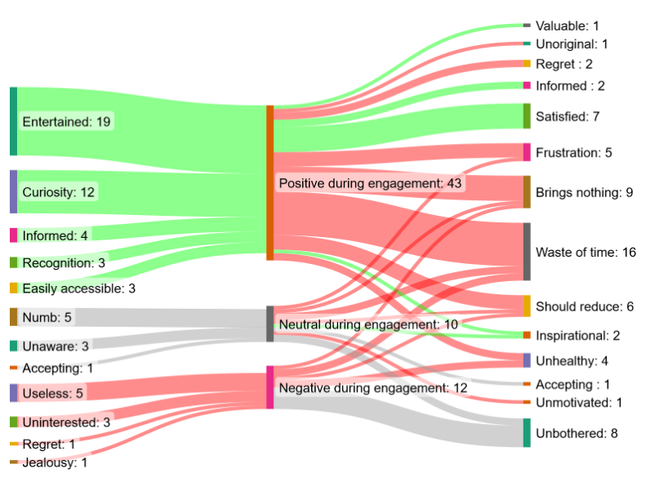
Figure 7: The shift in states of feelings from during engagement to after engaging with Digital Junkfood.
The flow chart reveals a significant trend where the majority of positive feelings during engagement with Digital Junkfood transitioned into negative feelings afterward. Users who initially felt entertained, curious, or found the content easily accessible reported experiencing negative feelings such as frustration, a sense of wasted time, and feeling unhealthy afterward. Participant 3 described it as: "In the moment I enjoy when I am busy with the content but afterwards I think to myself that it would have been better if I invested my time differently.".
Neutral and negative feelings experienced during engagement with Digital Junkfood translated also into neutral or negative feelings afterward. For example, users who experienced neutral feelings like being unbothered or unaware during the engagement tended to feel afterward that their time was wasted, frustrated, or that the content lacked value. Participant 2 explained this by saying: "The content does not give me a particular feeling when I see it but afterwards I realize that the content did not give me any form of satisfaction which makes me feel like it was a waste of my time.".
4.2.5 Aspects of the perception regarding Digital Junkfood. Figure 8 demonstrates the number of times the participant mentioned a certain categorized aspect of the perception regarding Digital Junkfood. These categories primarily stem from the responses provided during the interview's final question, which inquired about the reasons behind perceiving the selected content as Digital Junkfood. Furthermore, participants expressed their perceptions on Digital Junkfood throughout performing the task and in earlier interview questions. The perspectives were initially analyzed using open coding and subsequently refined through axial coding, resulting in the corresponding categories.
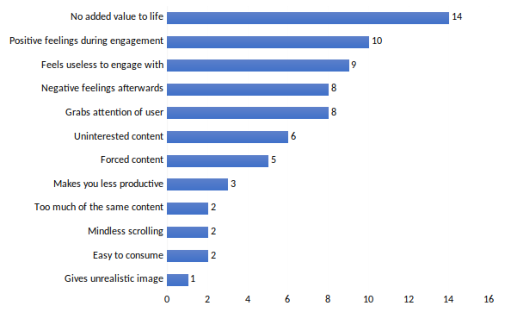
Figure 8: The distribution of aspects on how users perceive Digital Junkfood.
The aspect that received the most mentions during the study is that participants expressed that Digital Junkfood provided no added value in their real lives. Participant 16 clarified this by saying: "It does not add anything to my life. All those simple videos, it does not give me any new insights in a certain way, at least not something that I can apply in my life. It is just pure leisure.".
A group of participants said that they see Digital Junkfood as content that results in positive feelings while engaging with the content. Participant 22 mentioned: "The content can make me laugh sometimes and when I watch a funny video in the morning when I am in bed it can really be a good start of my day.". Interestingly, participant 11 described their positive feelings regarding Digital Junkfood by making a comparison with edible junk food: "It is content that I crave sometimes. Similar to that hamburger from McDonalds that I also crave and enjoy once in a while and there is nothing wrong with that.".
A collection of participants feel like they are acting useless while engaging with Digital Junkfood content. This is not necessarily seen as something negative, as some participants say that it is sometimes good to not always feel useful as everyone needs time to recharge. Participant 4 explained this: "The content that I see as Digital Junkfood is not actually bad for me, even though it is unproductive, it is sometimes just ’delicious’ to watch this content.".
5 DISCUSSION
In this section, we further investigate the concept of Digital Junkfood in terms of content elements, evoked feelings and individual perceptions. We end this section with implications for fair recommender systems and regulations in the field.
5.1 Content elements of Digital Junkfood
Studies on Internet addiction used to be predominantly centered around overall Internet usage. However, in recent times, it has become apparent that online content and activities play a more crucial role in addiction than the medium itself [21].
Our findings reveal that Instagram and TikTok were perceived to have the highest proportion of video content seen as Digital Junkfood, but that the time spent per video was highest on YouTube. In contrast, platforms such as Facebook, Reddit, and LinkedIn include a relatively larger amount of images and text-based content. This discrepancy suggests that the perception of Digital Junkfood might be influenced by the different presentation styles and content formats employed by different social media platforms.
The topics associated with Digital Junkfood exhibited significant variation among users, influenced by their individual interests that the algorithms of the platforms picked upon or the users themselves searched for. Furthermore, a discernible trend emerged among participants, with many examples provided indicating a lack of informational value regarding the topic of the content.
In contrast to what may have been expected, the majority of users in the study provided examples of content perceived as Digital Junkfood that were not sponsored posts. While a portion of Digital Junkfood was identified as sponsored content, primarily falling within the realms of advertisement, beauty, and fashion, this finding suggests that Digital Junkfood encompasses more than just posts with commercial purposes or content and is found within the ‘regular’ content as well.
The content perceived as Digital Junkfood by users in the study originated from three main sources: recommendations by the platform, user-initiated searches, or accounts followed by the user. Among these sources, the largest proportion of examples provided by participants came from content recommended by algorithms. One of the objectives of these algorithms is to keep the user on the platform for as long as possible, as a lack of engaging content may lead to the user closing the application [3].
This corresponds with the finding that users tend to associate Digital Junkfood with content that grabs their attention. Moreover, this finding aligns with the observation that the content is easily consumable, as the algorithm takes the initiative to provide users with engaging and interesting content, eliminating the need for them to search for it themselves. These perceptions of Digital Junkfood bare close similarities with edible junk food, where consumers are easily captivated by its visual appeal and enticing smell. Additionally, edible junk food is often easy to consume, as it is typically affordable and does not require extensive preparation.
5.2 Evoked feelings by Digital Junkfood
User experiences during the engagement with Digital Junkfood were found to elicit primarily positive feelings, such as feeling entertained or informed. This aligns with the participants’ perception of Digital Junkfood as attractive content that is easy to digest. It also explains that users experience Digital Junkfood in different ways.
Certain users have described experiencing a sense of unawareness and numbness as neutral emotions while engaging with content that is considered clickbait. This type of content can divert users from their intended goals, compromising their autonomy and potentially leading to feelings of unawareness and numbness, as users may not always be conscious of their actions associated with the engagement.
Moreover, a subset of users reported experiencing negative feelings while engaging with the content, such as feelings of uselessness or regret. This is in line with Baym et al [4], who found that users may feel regret when they aim to explore new content but are presented with (very) similar results to content they have previously viewed instead.
In contrast to the feelings experienced during engagement with Digital Junkfood, the feelings after engagement were predominantly negative, although some users also expressed neutral and positive feelings. Negative feelings, such as a sense of wasted time, lack of value, and regret, can be experienced by users who are not necessarily addicted to social media. [6, 25]. [22] and [17] suggest that these negative feelings can be attributed to attention-capture dark patterns, including recommendations, advertisements and infinite scrolling, which were exemplified by participants’ experiences.
Additionally, a small number of users reported experiencing positive emotions after engaging with Digital Junkfood, including feelings of satisfaction and being informed. The diversity of feelings between users after engaging with Digital Junkfood also supports the subjectivity of this concept. Moreover, it corresponds with the influence of external factors, such as context, motivation, and mood, which can impact the experienced emotions of users during and after engaging with Digital Junkfood.
5.3 Perspectives on Digital Junkfood
Users held diverse perspectives on Digital Junkfood, with some perceiving it more positively while others had a more negative perception. This difference in perception can be attributed to certain users primarily focusing on the moment of engagement. By contrast, others evaluated the value of the content after the engagement, which was predominantly seen as negative. In the latter case, users associated Digital Junkfood with content that they perceived as lacking value in their lives, and some even expressed that engaging with such content felt useless to them.
It was also stated that users felt that Digital Junkfood in some instances was being forced upon them, reminiscent of encountering appealing advertisements or the alluring sights and smells of edible junk food in city centers, which also cannot be avoided. Both Digital Junkfood and edible junk food are easily available. Various users initially thought that the Digital Junkfood looked very appealing, something which companies also aim to achieve when edible junk food is advertised. Users have expressed that their initial expectations were often not met when interacting with Digital Junkfood, similar to how consumers of edible junk food may feel when the food they see in advertisements does not match its actual appearance or taste after consumption.
5.4 Implications
The study's findings reveal numerous parallels between Digital Junkfood and edible junk food, as already discussed earlier in this discussion. Social media platforms and content creators present Digital Junkfood in an enticing manner to keep users engaged, similar to how junk food franchises encourage consumers to spend money on their products. Users’ time spent on Digital Junkfood can be compared with the high calorie consumption associated with edible junk food and the money spent on it.
A particularly important insight is that Digital Junkfood is not only delivered in the form of sponsored posts and clickbait, but that most junk food was found within regular content and timelines – as provided by ‘regular’ social media recommender algorithms. This brings a new perspective to the ongoing discussion on fair recommender systems [7]: in the field of social media, fairness in terms of protecting users from overly compulsive behavior turns out to be a very individual concept, as the same content may evoke very different feelings (such as enjoyment or repulsion) to different users, and the feelings afterwards may be more negative than they were during the interaction.
Research, societal discussion and regulations aim to minimize the consumption of both Digital Junkfood and edible junk food. For instance, content creators are expected to disclose sponsorship information on various platforms [9]. Further, in various countries, there have been discussions about imposing taxes on the purchase of edible junk food as a potential measure [14]. Implementing a strict limit on the consumption or publication of Digital Junkfood would pose significant challenges, though, primarily because – as illustrated by this study – the concept itself is subjective and dependent on individual perspectives.
Users have also shared their strategies for reducing their consumption of Digital Junkfood, such as setting timers for their daily usage or deleting certain platforms. This parallel can be drawn with edible junk food, where individuals strive for a healthier diet. However, in both cases, it is not always easy to resist, as Digital Junkfood and edible junk food are easily accessible, visually appealing, and can elicit various positive emotions, especially during consumption.
6 CONCLUSION
The aim of this research was to examine the concept of Digital Junkfood from a constructivist perspective, by drawing parallels to edible junk food. Throughout the study, several connections were established between these two terms. Some users view Digital Junkfood as an occasional indulgence that they do not mind, while others perceive it more negatively and seek to avoid it. In both cases, Digital Junkfood attempts to entice users or is even forced upon them, which may result in some users experiencing more negative feelings afterwards compared to their feelings when initially engaging with the content.
Users identified Digital Junkfood based on various content elements, such as the topic and source of the content. This variability in content elements is similar to the varying perceptions of consumers whether certain foodstuff belongs to edible junk food. Furthermore, Digital Junkfood can elicit a range of feelings in users during and after engagement. Most importantly, a majority of user experienced positive feelings while engaging with the content, while they expressed negative feelings after the engagement with such content. Many of those described feelings are parallel to the feelings experienced by individuals while and after consuming edible junk food.
These fundamentals, which contribute to a constructivist understanding of Digital Junkfood, help to support the exploration of compulsive social media use and addictive behaviors on social media. By more detailed understanding of the content elements, feelings, and behaviors associated with Digital Junkfood, insights can be gained into what triggers users and leads to the development of these behaviors.
A main take-away from this study is that there is no clear, objective border that separates genuine, benevolent content from addictive, malevolent content and that therefore no one-size-fits-all approaches or regulations for fairness in social media and its personalization algorithms can be defined. To quote Paracelsus: “All things are poison, and nothing is without poison; the dosage alone makes it so a thing is not a poison."
REFERENCES
Adel M Aladwani and Mohammad Almarzouq. 2016. Understanding compulsive social media use: The premise of complementing self-conceptions mismatch with technology. Computers in Human Behavior 60 (2016), 575–581.
Fayaz Ali, Ayaz Ali, Amjad Iqbal, and Abaid Ullah Zafar. 2021. How socially anxious people become compulsive social media users: The role of fear of negative evaluation and rejection. Telematics and Informatics 63 (2021), 101658.
Adam Alter. 2017. Irresistible: The rise of addictive technology and the business of keeping us hooked. Penguin.
Nancy K Baym, Kelly B Wagman, and Christopher J Persaud. 2020. Mindfully scrolling: Rethinking Facebook after time deactivated. Social Media+ Society 6, 2 (2020), 2056305120919105.
Amy Binns. 2014. Twitter city and Facebook village: teenage girls’ personas and experiences influenced by choice architecture in social networking sites. Journal of Media Practice 15, 2 (2014), 71–91.
Xiongfei Cao and Jianshan Sun. 2018. Exploring the effect of overload on the discontinuous intention of social media users: An SOR perspective. Computers in human behavior 81 (2018), 10–18.
Yashar Deldjoo, Dietmar Jannach, Alejandro Bellogin, Alessandro Difonzo, and Dario Zanzonelli. 2022. A survey of research on fair recommender systems. arXiv preprint arXiv:2205.11127 (2022).
Delve. [n. d.]. Essential Guide to Coding Qualitative Data. https://delvetool.com/guide
ETtech. 2023. Disclosure norms tightened for social media influencers. (1 2023). https://economictimes.indiatimes.com/tech/tech-bytes/social-media-influencers-to-pay-up-to-rs-50-lakh-fine-for-not-disclosing-sponsored-posts/articleshow/97177362.cms?from=mdr
Colin M Gray, Lorena Sanchez Chamorro, Ike Obi, and Ja-Nae Duane. 2023. Mapping the Landscape of Dark Patterns Scholarship: A Systematic Literature Review. In Companion Publication of the 2023 ACM Designing Interactive Systems Conference. 188–193.
David Greenfield. 2007. The addictive properties of Internet usage. Internet addiction: A handbook and guide to evaluation and treatment (2007), 133–153.
Mark D Griffiths. 1999. Internet addiction: Internet fuels other addictions. Student British Medical Journal 7, 1 (1999), 428–429.
Eelco Herder, Daniel Roßner, and Claus Atzenbeck. 2021. Reflecting on Social Media Behavior by Structuring and Exploring Posts and Comments. i-com 19, 3 (2021), 239–250.
Hooker. 2023. Danone's UK boss calls for higher taxes on unhealthy food. (6 2023). https://www.bbc.com/news/business-65872962
Daniel Kahneman. 2003. Maps of bounded rationality: Psychology for behavioral economics. American economic review 93, 5 (2003), 1449–1475.
Robert LaRose, Junghyun Kim, and Wei Peng. 2010. Social networking: Addictive, compulsive, problematic, or just another media habit? In A networked self. Routledge, 67–89.
Kai Lukoff, Ulrik Lyngs, Himanshu Zade, J Vera Liao, James Choi, Kaiyue Fan, Sean A Munson, and Alexis Hiniker. 2021. How the design of YouTube influences user sense of agency. In Proceedings of the 2021 CHI Conference on Human Factors in Computing Systems. 1–17.
Clea Machold, Gillian Judge, Alanna Mavrinac, Jessie Elliott, Anne Marie Murphy, and Edna Roche. 2012. Social networking patterns/hazards among Irish teenagers. Irish medical journal 105, 5 (2012), 151–152.
Eetu Marttila, Aki Koivula, and Pekka Räsänen. 2021. Does excessive social media use decrease subjective well-being? A longitudinal analysis of the relationship between problematic use, loneliness and life satisfaction. Telematics and Informatics 59 (2021), 101556.
Common Sense Media. 2023. Parents’ Ultimate Guide to TikTok. https://www.commonsensemedia.org/articles/parents-ultimate-guide-to-tiktok
Martin Mihajlov and Lucija Vejmelka. 2017. Internet addiction: A review of the first twenty years. Psychiatria Danubina 29, 3 (2017), 260–272.
Alberto Monge Roffarello and Luigi De Russis. 2022. Towards understanding the dark patterns that steal our attention. In CHI Conference on Human Factors in Computing Systems Extended Abstracts. 1–7.
Maria A Rasmussen, Julie O Frydendahl, Elisa D Mekler, and Kasper Hornbæk. 2021. Is Time on Smartphones Well Spent?Interacting with Computers 33, 5 (2021), 522–536.
Cecilie Schou Andreassen and Stale Pallesen. 2014. Social network site addiction-an overview. Current pharmaceutical design 20, 25 (2014), 4053–4061.
Ofir Turel. 2015. Quitting the use of a habituated hedonic information system: a theoretical model and empirical examination of Facebook users. European Journal of Information Systems 24, 4 (2015), 431–446.
Henry H Wilmer, Lauren E Sherman, and Jason M Chein. 2017. Smartphones and cognition: A review of research exploring the links between mobile technology habits and cognitive functioning. Frontiers in psychology 8 (2017), 605.
FOOTNOTE
1Link to instruction videos removed for anonymous review purposes
Permission to make digital or hard copies of all or part of this work for personal or classroom use is granted without fee provided that copies are not made or distributed for profit or commercial advantage and that copies bear this notice and the full citation on the first page. Copyrights for components of this work owned by others than the author(s) must be honored. Abstracting with credit is permitted. To copy otherwise, or republish, to post on servers or to redistribute to lists, requires prior specific permission and/or a fee. Request permissions from permissions@acm.org.
HT '24, September 10–13, 2024, Poznan, Poland
© 2024 Copyright held by the owner/author(s). Publication rights licensed to ACM.
ACM ISBN 979-8-4007-0595-3/24/09.
Do you like what you are reading? Subscribe to receive updates.
Unsubscribe anytime