
Source attribution: Publisher HTML for DOI: 10.1145/3648188.3678217, cross-checked against the supplied ACM PDF.
Disrupting scientific podcasts. Prototype and blueprints for an ergodic neuroscientific talk.
Authors: Jan K. Argasiński, Kamil Pilch, Joan Falcó-Roget, Anna Partyka, Katarzyna Baliga-Nicholson
DOI: https://doi.org/10.1145/3648188.3678217 HT '24: 35th ACM Conference on Hypertext and Social Media, Poznan, Poland, September 2024
In this paper, we propose an innovative framework for scientific podcasts that integrates principles of ergodic literature and hypertext theory to enhance user engagement and educational depth. Traditional podcasts follow a linear structure, limiting user interaction and exploration. Our approach disrupts this norm by transforming podcasts into non-linear, interactive experiences. We introduce a prototype that segments expert interviews into concise, interconnected video fragments, each augmented with hyperlinked references to related scientific articles, interactive diagrams, and educational resources. This method allows users to navigate content in a personalized, exploratory manner, facilitating deeper engagement with complex topics in computational neuroscience. Detailed metadata annotations and dynamic hyperlinking create a robust network of content, enabling seamless transitions between topics and revisiting previously explored segments. We incorporate game design elements to sustain interest and employ user tracking to personalize content recommendations, enhancing the overall learning experience. This prototype represents a significant advancement in digital media, combining the accessibility of podcasts with the interactivity of hypertext, thus paving the way for more immersive and informative scientific communication.
CCS Concepts: • Human-centered computing → Social navigation; Interaction design theory, concepts and paradigms;
Keywords: hypertext, non-linearity, podcast, blueprints
ACM Reference Format: Jan K. Argasinski, Katarzyna Baliga-Nicholson, Anna Partyka, Kamil Pilch, and Joan Falco-Roget. 2024. Disrupting scientific podcasts. Prototype and blueprints for an ergodic neuroscientific talk. In 35th ACM Conference on Hypertext and Social Media (HT '24), September 10--13, 2024, Poznan, Poland. ACM, New York, NY, USA 6 Pages. https://doi.org/10.1145/3648188.3678217
1 INTRODUCTION
Podcasts have rapidly evolved into a pivotal medium for contemporary communication, reflecting the broader shift towards digital and on-demand content consumption. Their growing popularity is driven by their flexibility, allowing users to engage with a diverse array of topics at their convenience, whether during commutes, workouts, or leisure time. This adaptability aligns with modern lifestyles, enhancing the appeal of podcasts across various demographics.
In scientific discourse, podcasts serve as a dynamic platform for disseminating knowledge and engaging the public with complex subjects. A notable feature of many scientific podcasts is their use of meta-information to enhance the listening experience. This involves integrating rich references, hyperlinks, and follow-up resources directly into the podcast or its accompanying materials. Such features allow listeners to delve deeper into the content, providing pathways to primary research articles, related studies, and additional readings. This multimedia enrichment transforms passive listening into an interactive educational journey, facilitating a more profound comprehension of the discussed topics.
Several exemplary scientific podcasts illustrate this trend:
"Science Vs" 1 – Produced by Gimlet Media, "Science Vs" scrutinizes myths and misconceptions by presenting evidence-based insights. Each episode is meticulously researched, often providing listeners with links to studies and scientific articles that underpin the discussions, allowing them to verify claims and explore the science behind popular topics.
"The Infinite Monkey Cage" 2 – Hosted by physicist Brian Cox and comedian Robin Ince, this BBC Radio 4 podcast blends humor with rigorous scientific analysis. Episodes often reference seminal papers and books, along with discussions on the evolution of scientific theories. The show's website and social media channels frequently share additional resources and readings.
"Nature Podcast" 3 – Produced by the prestigious journal Nature, this podcast offers insights into the latest scientific research and developments. Episodes typically feature interviews with researchers and provide links to the discussed articles, enabling listeners to access original studies and supplementary materials.
In this paper, we will explore an innovative enhancement of podcasts and videocasts by transforming them into non-linear, ergodic, interlinked phenomena. This approach allows users to engage with content in a hypertextual manner, offering a more immersive and exploratory experience. By incorporating non-linearity, we enable users to navigate through chains of thoughts and ideas, choosing their own paths through the material based on their interests and curiosities. This ergodic structure facilitates a deeper interaction with the content, as users can delve into specific topics, cross-reference related discussions, and follow hyperlinks to supplementary resources. This methodology not only enhances user engagement but also promotes a more comprehensive understanding by allowing users to construct personalized journeys through the information presented, aligning with the principles of hypertext theory and expanding the potential of digital media as an educational and informational tool.
2 RELATED WORKS
2.1 In other media
The concept of nonlinearity, a widely explored theme, manifests prominently across various domains such as art, literature, and especially video games. In art, non-sequential structures often enhance aesthetic value by challenging the viewer to actively engage with and interpret the work, fostering a richer and more personal experience. In literature, non-linear narratives allow authors to experiment with alternative storylines and the generative power of variability, captivating readers with multiple potential outcomes. However, it is in video games that non-linear progression becomes an indispensable feature, acting as a sine qua non of the medium. Here, non-linear gameplay enables interactive storytelling and player agency, allowing for dynamic experiences and branching paths essential to the immersive nature of gaming. This capacity to offer varied experiences and multiple endings is fundamental to the medium's appeal, highlighting how non-traditional structures enhance engagement and depth across different forms of expression.
Interesting examples of alternative textualities outside of gaming media include such works as selected creations of OuLiPo group (fr. Ouvroir de littérature potentielle, en. workshop of potential literature) mostly active in the second half of XXth century with such creations as Queneau's One hundred thousand billion poems [7] - a thin volume that contains actual one hundred tousand bilion poems that can be "generated" by physically manipulating provided verses.
Nonlinear narrative structures have become increasingly prominent in contemporary media, offering diverse ways to engage audiences and convey complex stories. Two significant examples illustrate distinct applications of nonlinearity: Quentin Tarantino's movie Pulp Fiction (1994) and Netflix's Bandersnatch episode of Black Mirror (2018).
In Pulp Fiction, the narrative employs a disjointed chronology, presenting events out of sequence. This nonlinear structure enhances the storytelling by creating a complex web of interconnected plots, allowing the audience to reassemble the narrative puzzle. The film's discontinuous timeline does not disrupt the viewing experience but instead adds depth and prompts viewers to actively engage in reconstructing the sequence of events [10]. This narrative technique enriches the thematic complexity and character development, as viewers witness different perspectives and contexts before understanding the full scope of the story. The chronological disjunction serves as a means to explore narrative connections and character motivations without altering the fundamental passive nature of watching a film.
Netflix's Bandersnatch in seemingly the same manner incorporates interactive nonlinearity within a traditionally linear medium. Unlike Pulp Fiction, where the nonlinearity exists within the narrative structure itself, Bandersnatch requires the audience to participate actively in the unfolding of the plot. The episode utilizes a branching narrative framework, where viewers make choices that directly influence the storyline and lead to multiple potential outcomes. This interactive component disrupts the conventional viewing experience by transforming the audience from passive observers into active participants. The decision-making process in Bandersnatch is not merely a stylistic choice but a core mechanic that defines the experience. Each decision point interrupts the narrative flow, requiring viewers to engage with the content on a deeper level and contributing to the formation of a unique viewing pathway. This gamified interaction fundamentally alters the engagement model by integrating elements of video game mechanics into cinematic storytelling.
The distinction between these two applications of nonlinearity highlights their impact on the viewer's experience. In Pulp Fiction, the nonlinear narrative serves as a structural tool that enriches the story without altering the traditional film-watching experience. Conversely, in Bandersnatch, the interactive nonlinearity not only alters the narrative structure but also transforms the viewer's role, blending the mechanics of gameplay with cinematic elements. This integration of interactivity into a linear medium exemplifies a significant evolution in storytelling, where the narrative's progression and the viewer's engagement are interdependent.
Thus, the comparison between Pulp Fiction and Bandersnatch demonstrates how nonlinearity can either augment traditional narrative techniques or redefine audience interaction (which will pro of to be usefull conept later in this paper [6]). Pulp Fiction uses nonlinearity to enhance narrative complexity, while Bandersnatch employs it to create a participatory experience, showcasing the versatility and transformative potential of non-sequential storytelling in modern media.
2.2 Regarding podcasts
There exist, obviously, non-linear podcasts. And theories surrounding their effectiveness in reaching audiences, maintaining engagement, and conveying content are gaining increasing attention. A key aspect of this discourse involves the concept of secondary orality associated with the podcast medium. Secondary orality refers to the way podcasts blend characteristics of traditional oral storytelling with modern communication technologies. This phenomenon is significant for understanding how podcasts are received as narrative forms. However, fragmentation and interactivity within podcasts can disrupt this narrative order, potentially affecting how listeners engage with and interpret the content. Disruption between "Authenticity vs. Interactivity," may challenge the inherent narrative coherence and authenticity that secondary orality provides [9].
Secondary orality in podcasts suggests a return to oral traditions where narrative is dynamic, immediate, and personal, fostering a more authentic listening experience. The integration of interactive elements and the fragmented structure of some nonlinear podcasts can, however, alter this reception. These elements introduce variability and choices that can make the narrative experience more disjointed and less cohesive, leading to a different mode of engagement [5]. This shift raises important questions about the effects of hypertextualization on the podcast medium. Hypertextualization refers to the process of integrating hyperlinks, choices, and interactive paths within a narrative, transforming it into a multi-layered, non-linear experience [2].
Understanding these dynamics is essential for evaluating the potential benefits and drawbacks of incorporating nonlinear, interactive elements into podcasts. It offers insights into how podcasts can evolve to balance traditional narrative techniques with innovative, interactive features while retaining their ability to engage and inform audiences effectively [8].
3 RELATED THEORY
There is a substantial body of theories concerning non-linear textuality, with Espen Aarseth's idea of cybertext, particularly his concept of ergodic literature, being one of the most significant [1]. Aarseth's cybertext refers to a type of textual medium that requires non-trivial effort from the reader to traverse. This is distinct from traditional texts, where reading typically involves linear progression with minimal physical or interpretive effort. The term “ergodic,” derived from the Greek words for "work" and "path," implies that readers must perform a deliberate activity beyond simple reading to uncover the text's meaning. This concept challenges the conventional understanding of narrative by transforming the text into a labyrinth where the path of interpretation is not predetermined but is actively constructed by the reader's choices.
Central to Aarseth's framework is the idea that texts can be seen as labyrinthine structures, symbolizing a multitude of possible pathways, much like the metaphor of the "garden of forking paths." This metaphor, originally proposed by Jorge Luis Borges, suggests a narrative that continuously diverges, offering multiple potential outcomes and interpretations based on the reader's decisions, thereby emphasizing the roads not taken [3].
Hypertextuality, another crucial concept in this domain, refers to the organization of text in a manner where segments are interconnected through hyperlinks, allowing for non-linear navigation and an associative reading experience. This results in emergent narratives, which arise from the complexity of the interactions between the reader's choices and the text's structure, producing stories that are not pre-scripted but develop uniquely through the reader's engagement [2].
In the contemporary digital landscape, acts of active reading have also become a prominent phenomena, characterized by readers who interact with texts in dynamic ways. Platforms such as Wattpad4 exemplify this trend, enabling users to engage with stories actively, provide feedback, and even influence narrative directions, thus blurring the boundaries between readers and writers. This participatory approach to literature reflects a broader cultural shift towards interactive media consumption.
Tools like Twine5 further support the creation of non-linear and interactive texts. Twine is an open-source platform that allows authors to write and design stories with complex branching narratives without requiring programming knowledge. It provides a visual interface for mapping out the connections between different narrative segments, facilitating the creation of intricate hypertext fiction and interactive stories. This platform empowers writers to experiment with the form and structure of their narratives, creating works that require the reader's active participation to explore the myriad possibilities embedded within the text.
4 BLUEPRINTS
The case presented in this report draws from all above-mentioned ideas. Our concept is to create a podcast/videocast that presents complex content in the form of a conversation with an expert. This format is designed so that the viewer only hears the answers provided by the expert, without the accompanying questions. The entire interview is recorded and then meticulously edited, dividing it into short segments lasting approximately 2 minutes each. Each complete conversation is broken down into about 30 such segments, allowing for a more flexible presentation of content (note A,B,D on Fig. 1).
These segments are then interconnected using hyperlinks, facilitating smooth transitions between different parts of the interview. These hyperlinks not only link various sections of the interview but also lead to supplementary content such as scientific articles, popular science articles, GIT repositories with source code, educational videos, glossaries of terms, and explanatory animations (note C on Fig. 1). This structure allows the viewer to delve deeper into the discussed topics, offering a rich context and additional information available on demand.
Some of these additional contents, such as interactive diagrams, can be viewed in real-time, allowing for immediate interaction and a better understanding of the material. Other materials might require moving on to the next podcast segment, such as the next video, enabling a more complex exploration of the topic in a structured sequence (note dotted arrows on Fig. 1).
Each video segment begins with a short, few-second “teaser” sequence at the start (note diamond-shaped inputs and outputs in Fig. 1). This “teaser” can be previewed from the previous segment or used to navigate to another video, creating a network of connections between various contents. “Teasers” are carefully chosen to attract attention and serve as hooks that encourage the viewer to continue watching the rest of the segment. The main part of the segment contains contextual augmentation, which includes materials such as scientific articles, code snippets, and other relevant sources. These additional materials then lead to further “teasers” of the main materials, creating an extensive network of information that supports and extends the discussed topics.
Such an organization of content enables the creation of a chain of multimodal resources that can be independently explored by the viewer. Each segment becomes a starting point for deeper understanding and interaction with the material, offering a comprehensive insight into the discussed issues.
The key innovation of this project is that a single conversation does not create one traditional “episode.” Instead, the beginning of the conversation serves merely as a suggested starting point for the viewer, from which exploration can begin. Such starting points appear whenever a new conversation is available. Each segmented conversation is connected with relevant fragments from other conversations, creating an extensive network of related content. This allows the viewer to have continuous access to the entirety of materials from all podcasts, which can be freely explored. It may happen that while exploring a new conversation from its starting point (when a new “episode” appears), the viewer navigates through connected paths to content they have previously encountered in another “episode.” This arrangement allows for the creation of a continuously growing “database” for an interactive experience, enabling the return to previously explored topics and discovering new connections between contents. Thus, viewers can revisit the podcast multiple times, each time uncovering new aspects and information.
4.1 Metadata
Each segment and reference (augmentation) introduced into the database is annotated with detailed metadata. This annotation includes information such as content type, relevance, keywords, context, and relationships to other segments. The thorough metadata provides a structured foundation for a system of dynamic hyperlinks. These hyperlinks are automatically generated based on the metadata, allowing for a seamless and intuitive navigation experience. Users can explore related content effortlessly, as the system dynamically connects segments and references based on their metadata, creating a rich, interconnected web of information. This approach transforms the content database into a robust platform for exploration, enhancing the user's ability to discover and interact with a diverse range of topics and materials.
4.2 User tracking and suggested tracks. Game design patterns.
This approach allows the system to recommend content to the user based on their previous interactions, either during subsequent visits or in future “episodes”. By analyzing the user's history, the system can suggest revisiting content they have already explored or offer a refresher on topics they are already familiar with but might want to review.
This personalized recommendation enhances the user's learning experience by reinforcing knowledge and introducing new perspectives based on their engagement patterns.
Additionally, this capability provides the foundation for tracking and analyzing user preferences across different content types and topics. By understanding what content resonates with various users, the system can generate insights into user behavior and preferences, enabling more targeted content delivery and improved user satisfaction.
Crucially, this solution also supports the integration of gamification elements by applying selected game design patterns [4] to create dramatic tension and sustain viewer interest and engagement. By incorporating challenges, rewards, and interactive elements, the system can transform the exploration of content into a more compelling and immersive experience, motivating users to continue their journey and engage deeply with the material.
4.3 Dynamic comments and interaction
The final component involves introducing the capability for dynamic commenting on content as well as commenting on existing comments. This functionality enables viewers to engage actively with the content, akin to the interaction model seen in Wattpad. Users can leave comments on specific segments of the content, providing insights, questions, or feedback. Additionally, they can respond to comments left by others, fostering a dialogue around the material.
This interaction mechanism allows viewers to trace and reconstruct the pathways taken by other users through the content, offering a richer understanding of the material from diverse perspectives. It creates a community-driven environment where viewers can share their interpretations, clarify doubts, and collaborate in exploring the presented topics. By integrating this feature, the platform not only enhances user engagement but also supports a collaborative learning experience, enriching the interaction with the content and between users.
Through dynamic commenting, the system captures real-time reactions and discussions, enabling a continuous exchange of ideas and fostering a deeper connection between the viewers and the content. This interactive layer adds a social dimension to the exploration process, making it a more engaging and communal experience, and allowing users to build on each other's knowledge and perspectives as they navigate through the content.
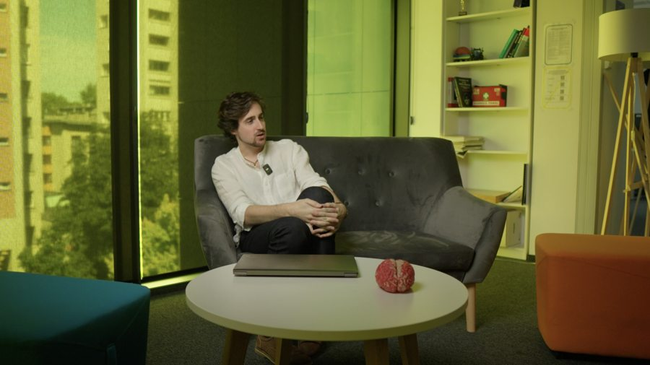
Figure 1: Blueprint for the proposed non-linear podcast
5 CASE STUDY. THE PROTOTYPE
At the Sano - Centre for Computational Medicine, we have developed an experimental prototype of a podcast that delves into complex and demanding topics within the field of computational neuroscience. This prototype includes a series of discussions with the invited expert Joan Falcó-Roget - physicist and neuroscientist, who contributed detailed insights across various segments. The interview with J.F.-R. is divided into specific topics, each designed to address critical areas of computational neuroscience:
Brain Imaging: Discusses techniques and technologies used to visualize brain structures and functions, highlighting advances and limitations.
Causal Methods: Explores methodologies for determining causal relationships in neuroscience, emphasizing their application and challenges.
Causality and Neuropathology: Examines the role of causality in understanding and diagnosing neuropathological conditions.
Challenges in Neuroimaging: Identifies and analyses the difficulties faced in the field of neuroimaging, including technical, interpretive, and methodological issues.
Correlation vs Causation: Differentiates between correlation and causation, explaining why understanding this distinction is crucial in neuroscience research.
Determinism: Investigates the concept of determinism in the context of neural processes and behaviors.
Free Will: Discusses the implications of neuroscience findings on the concept of free will, considering how brain activity relates to autonomous decision-making.
High-Dimensional Data: Addresses the challenges of analyzing and interpreting high-dimensional datasets commonly used in neuroscience.
How Something Can Cause Something Else: Provides an in-depth explanation of the mechanisms and principles behind causal relationships.
How to Study Causality: Offers methodologies and best practices for studying causality in neuroscience, including experimental and observational approaches.
Non-Causal Methods in Neuroscience: Reviews methods used in neuroscience that do not directly address causality, explaining their role and limitations.
Numerical Causality: Discusses numerical approaches to understanding causality, including algorithms and computational techniques.
Reproducibility of Neuroscientific Research: Analyzes the challenges and strategies for ensuring reproducibility in neuroscience studies, a critical issue for scientific validation.
This prototype is designed to present these complex topics in a manner that is accessible yet deeply informative. Each segment is structured to provide a comprehensive overview of the topic, enriched by J.F.-R.’s expertise. The segments are interlinked with detailed metadata, allowing for dynamic navigation through the content. Hyperlinks connect these segments with additional resources such as scientific articles, explanatory diagrams, and related video content, creating a multimodal and interactive exploration experience.
The system's design includes the ability to suggest content based on the user's previous interactions, enhancing personalized learning by recommending relevant topics and revisiting previously explored material. This functionality also supports content preference tracking and analysis, offering insights into user engagement and behavior.
Moreover, the prototype integrates gamification elements, applying game design patterns to build dramatic tension and sustain viewer interest. Dynamic commenting features enable viewers to interact with the content and other users, creating a collaborative environment that enhances the learning experience. This approach transforms the podcast into a continuously evolving "database" of knowledge, providing an engaging and interactive platform for exploring the depths of computational neuroscience.
The whole project is very much in the development and prototyping phase, not yet tested on viewers - therefore presented here in ACM Hypertext's "Blue Sky & Provocations" path. We hope to fully implement all the functionalities and release a demo showcasing a few "episodes" of the podcast later this year (2024).
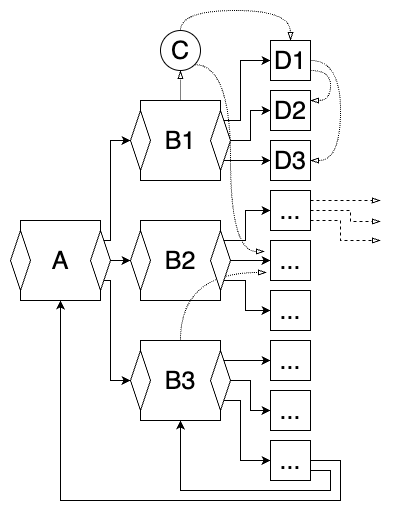
Figure 2: Example video fragment of neuroscientific talk
6 FUTURE CONSIDERATIONS. WHY DON'T WE SEE A LOT OF SUCH PROJECTS IN THE WILD?
The rarity of interactive and dynamically structured podcasts, despite their innovative potential, can be attributed to several interconnected challenges. Firstly, the complexity of producing such podcasts is significantly higher than that of traditional formats. This involves breaking down conversations into numerous short segments and meticulously editing them to ensure smooth transitions. Additionally, each segment must be annotated with detailed metadata to enable dynamic hyperlinking and contextual exploration. Managing these hyperlinks requires a robust technical infrastructure and ongoing maintenance to keep them accurate and relevant. Integrating external resources such as articles, diagrams, and other media adds further to the workload, necessitating continuous curation and updates.
From a technical standpoint, the development of platforms capable of supporting these features is challenging. Implementing dynamic hyperlinking, metadata-driven recommendations, real-time commenting, and gamification elements demands advanced backend systems and interfaces. The creation of such sophisticated systems often requires a substantial financial investment and expertise in content creation, technical development, and user experience design.
The production process is also resource-intensive. High production costs stem from the need for specialized tools and software, alongside the development of possibly proprietary platforms to manage dynamic content. Furthermore, building a comprehensive content database that supports interactive exploration involves not only the initial effort of content creation but also the continuous effort of updating and expanding the database to maintain its relevance and engagement value. Ensuring the quality and depth of this content requires rigorous curation and review processes.
User adoption and familiarity present additional hurdles. Interactive podcasts represent a significant departure from traditional media consumption patterns, and users may face a learning curve in navigating and interacting with a non-linear format. Encouraging users to engage actively with the content, as opposed to passively consuming it, involves changing established media consumption behaviors.
Moreover, assessing market demand and the viability of such innovative formats can be challenging. These podcasts may appeal predominantly to niche audiences who are interested in deep dives and interactive content, which might limit their broader market appeal. Developing sustainable monetization strategies for this type of content can also be more complex compared to traditional podcasting models.
Content compatibility is another consideration, as not all topics lend themselves to interactive and dynamically structured formats. Topics that benefit from linear storytelling or do not require extensive contextual exploration might not justify the additional effort needed for dynamic structuring. Audience expectations also play a role, as some listeners might prefer straightforward, linear content that provides clear, uninterrupted narratives.
Finally, the lack of successful precedents and case studies in this domain adds to the challenges. Producers face the risk of investing significant resources into a format that lacks established benchmarks and proven success stories, making it difficult to gauge the potential returns. Without widely recognized examples, there is less guidance on best practices and potential pitfalls, increasing the pioneering risks associated with this innovative approach.
In conclusion, the scarcity of interactive and dynamically structured podcasts stems from a combination of technical, financial, and content-related challenges. These barriers, coupled with the need for technological advancements, resource allocation, and shifts in content creation approaches and audience expectations, contribute to the limited adoption of such formats in the current podcasting landscape.
ACKNOWLEDGMENTS
The publication was created within the project of the Minister of Science and Higher Education "Support for the activity of Centers of Excellence established in Poland under Horizon 2020" on the basis of the contract number MEiN/2023/DIR/3796.
This project has received funding from the European Union's Horizon 2020 research and innovation programme under grant agreement No 857533.
This publication is supported by Sano project carried out within the International Research Agendas programme of the Foundation for Polish Science, co-financed by the European Union under the European Regional Development Fund.
REFERENCES
Espen Aarseth. 1997. Cybertext. Perspectives on ergodic literature (1997), 202.
Claus Atzenbeck and Peter J Nürnberg. 2019. Hypertext as method. In Proceedings of the 30th ACM Conference on Hypertext and Social Media. 29–38.
Raphaël Baroni. 2017. The Garden of Forking Paths: Virtualities and Challenges for Contemporary Narratology. Emerging Vectors of Narratology 57 (2017), 247.
Staffan Björk and Jussi Holopainen. 2005. Games and design patterns. The game design reader: A rules of play anthology (2005), 410–437.
Mariann Hardey and Simon J James. 2022. Digital seriality and narrative branching: The podcast Serial, Season One. Communication and critical/cultural studies 19, 1 (2022), 74–90.
Jon Heggestad. 2021. Bandersnatch-ed Pedagogy: Narrative, Database, and Twine. (2021).
Raymond Queneau. 1961. One hundred thousand billion poems.
Neelima Sailaja, Andy Crabtree, Thomas Lodge, Alan Chamberlain, Paul Coulton, Matthew Pilling, and Ian Forrester. 2024. Making of an Adaptive Podcast that Engenders Trust through Data Negotiability. In Proceedings of the 2024 ACM International Conference on Interactive Media Experiences. 334–341.
Christine Tulley. 2011. IText reconfigured: The rise of the podcast. Journal of Business and Technical Communication 25, 3 (2011), 256–275.
Qiong Wang. 2023. A Brief Analysis on the Narrative Art of Pulp Fiction. Art and Society 2, 1 (2023), 42–44.
FOOTNOTE
1Science Vs, http://gimletmedia.com/shows/science-vs
2The Infinite Monkey Cage, https://www.bbc.co.uk/programmes/b00snr0w
3Nature Podcast, https://www.nature.com/nature/articles?type=nature-podcast
4Wattpad, https://www.wattpad.com/
5Twine, https://twinery.org/

This work is licensed under a Creative Commons Attribution- NonCommercial-ShareAlike International 4.0 License.
HT '24, September 10–13, 2024, Poznan, Poland
© 2024 Copyright held by the owner/author(s).
ACM ISBN 979-8-4007-0595-3/24/09.
Do you like what you are reading? Subscribe to receive updates.
Unsubscribe anytime