
Deep Viewpoints: Scripted Support for the Citizen Curation of Museum Artworks
Paul Mulholland (Knowledge Media Institute, The Open University, Milton Keynes, UK), Adam Stoneman (Irish Museum of Modern Art, Royal Hospital Kilmainham, Dublin, Ireland), Jason Carvalho (Knowledge Media Institute, The Open University, Milton Keynes, UK), Enrico Daga (Knowledge Media Institute, The Open University, Milton Keynes, UK), Mark Maguire (Irish Museum of Modern Art, Royal Hospital Kilmainham, Dublin, Ireland)
Published in HT '23: 34th ACM Conference on Hypertext and Social Media · DOI: 10.1145/3603163.3609060 · License: CC BY 4.0
Authors: Enrico Daga, Mark Maguire, Jason Carvalho, Paul Mulholland, Adam Stoneman
Keywords: Citizen Curation, Museums, Scripting
Session: Workflows and Infrastructures
Pages: spit
Conference: HT '23
Abstract
This paper describes the design and use of Deep Viewpoints, a software platform for eliciting and sharing citizen perspectives associated with museum artworks. The design of the platform is inspired by the process of Slow Looking in which museum visitors are guided to observe artworks and develop their own response. Within Deep Viewpoints, the processes of observing and responding to artworks are guided by a script comprising stages containing artworks, statements, and prompts or questions to which the follower of the script can respond. Scripts are intended for use either in the gallery or remotely. We describe the design of Deep Viewpoints and how it can be used to respond to scripts, view the responses of others and author new scripts. We then describe our experiences of using Deep Viewpoints with communities traditionally underserved by the museum sector to bring new perspectives to the museum collection. Crucially, the communities were not only involved in interpreting artworks with the guidance of the scripts but also creating new scripts, mediating how others observe and think about art. Analysis of the authored scripts revealed a range of ways in which they were used to share interpretations of the artworks and mediate what questions others should ask themselves when viewing the artworks. Finally, we reflect on the potential role a scripted approach to Citizen Curation could play in promoting cultural engagement.
CCS Concepts: • Human-centered computing~Human computer interaction (HCI)~Interaction paradigms~Hypertext / hypermedia • Human-centered computing~Interaction design~Interaction design process and methods~User centered design
Keywords: Scripting, Museums, Citizen Curation
ACM Reference format: Paul Mulholland, Adam Stoneman, Jason Carvalho, Enrico Daga, Mark Maguire. 2023. Deep Viewpoints: Scripted Support for the Citizen Curation of Museum Artworks. In Proceedings of the 34th ACM Conference on Hypertext and Social Media (HT '23), September 4-8, 2023, Rome, Italy. ACM, New York, NY, USA, 11 pages. https://doi.org/10.1145/3603163.3609060
1 Introduction
The Warwick Commission [33] reported that UK residents from higher socio-economic groups accounted for 87% of museum visitors. Adults from BAME (Black, Asian and Minority Ethnic) groups were found to be less likely to have visited a heritage site in the past year compared to non-BAME groups. They argue that this participation gap is not due to cost: free entry to UK national museums mirrored an increase in the participation gap between socio-economic groups. Rather, they suggest that the participation gap is due to many public cultural institutions having a perceived lack of relevance to many of their potential audiences.
Simon [43] explores why many cultural institutions have a relevance problem and strategies for how relevance can be established. Drawing on the work of Wilson and Sperber [52], Simon argues that two criteria affect relevance. First, new information is more relevant if it can stimulate a positive cognitive effect, i.e. yield a valuable conclusion. Second, new information is more relevant the lower the effort required to absorb it.
The relevance or value of an artwork is not necessarily intrinsic or pre-determined. Falk and Dierking [13] argue that museum visitors construct meaning for themselves through interaction with the artwork. Simon [42] argues that the voices of visitors, illuminating the process through which they created meaning, can be used to invigorate the museum's public facing offerings. With appropriate contextual support visitors may be able to unlock the relevance of artworks to their own lives. Capturing and sharing these meaning-making processes may assist others in appreciating and finding relevance for themselves.
Citizen Curation can be defined as individuals and groups from outside the museum sector actively engaging in curatorial activities to communicate ideas and stories [45]. Citizen Curation activities carried out by communities who do not traditionally visit the museum could be used as a method for bringing new voices to the museum's public offering, providing perspectives that establish connections between the museum's collection and exhibitions, and the concerns and interests of those underserved communities. Such a process could help to realize a Participatory Museum in which visitors act as both creators and consumers of content [42]. However, Simon [42] argues that participatory museum initiatives produce better outcomes if the opportunities to contribute are constrained and focused around the content on display in the museum. Unconstrained opportunities for self-expression only appeal to a tiny percentage of audiences [42] and for many induce a "fear of the blank page" [38]. More unguided, open-ended forms of participation would likely reinforce rather than address the disparities in museum engagement found between different communities.
Scripts could be one promising way of guiding and constraining participation. Within the Hypertext field there is a significant body of research demonstrating the use of scripts or paths to guide navigation and associated activities, for example, the work on Walden's Paths [15, 40]. Scripts have also been used in the science education field to guide students through the stages of a scientific inquiry such as hypothesis formulation and data collection [30, 39]. Of relevance to the museum context, approaches to locative hypertext have been developed to understand how the reader can build and experience a coherent and engaging narrative as they traverse a physical space [26].
The overall aim of this work is to explore how the notion of scripting could be used to guide the process of Citizen Curation, enabling underserved communities to develop and share their own perspectives on the museum collection. Importantly, the objective is to not only use scripts to guide visitors in the interpretation of artworks but also directly involve new communities in the creation of new scripts, mediating how others engage with artworks.
The rest of the paper is structured as follows. Section 2 outlines related work on how visitors can be supported in interpreting art and curating or mediating experiences for other visitors, and considers the use of scripts and other hypertext structures to guide navigation and inquiry. Section 3 describes IMMA Deep Viewpoints, a web application co-designed with the Irish Museum of Modern Art (IMMA) to support the authoring and use of Citizen Curation scripts. Section 4 describes the use of IMMA Deep Viewpoints with a range of communities under-represented among the museum's visitors or who experience barriers to cultural participation. Section 5 presents an analysis of scripts produced by the communities and the museum. Finally, section 6 discusses the role a scripted approach to Citizen Curation could play in promoting cultural engagement.
2 Related Work
2.1 Slow Looking
Increasingly, the role of the museum in the exhibition of artworks is to support the visitor in developing their own interpretation or response, rather than interpreting the artwork for the visitor [42]. This process of bridging between the visitor and the artwork and helping them to construct their own response can be described as a form of mediation [31]. Visual Thinking Strategies (VTS) [50] is one visual art mediation technique used in museums. The VTS method guides the visitor through a simple set of questions (e.g. "What is going on in this picture?") helping them to develop their own interpretation of the artwork. Recently, several museums have introduced Slow Looking initiatives, either onsite or online. Slow Looking uses prompts and questions to help the visitor to develop their own interpretation while recognizing the advantages of mindfulness and slowing down to make a personal connection to an artwork [32, 35, 47].
The Irish Museum of Modern Art (IMMA) developed a series of Slow Art Videos [20], originally as part of their program for older people and extended in response to museum closure during lockdown. The videos, developed and presented by the museum's Visitor Engagement Team (VET), each focus on one artwork. The videos generally start by asking the viewer to make themselves comfortable and inviting them to let their eyes wander over the artwork. Initial questions are then introduced to prompt the viewer to think about what they see (e.g. "What is our attention drawn to first?"). These initial questions often precede any contextual information about the artwork. During the video, information is introduced gradually, related for example to the life of the artist, and the social and political context to which they were responding. The visitor may then be invited to reconsider some of the initial questions, provoking reflection on how contextual information has influenced what they see. Toward the end of the video, the questions become more imaginative, beyond the observable elements of the work. For example, a video about a surrealist work that is a hybrid of objects [9], invites the viewer to think about which two everyday objects they would combine if producing their own artwork.
The design of the Slow Art Videos subscribes to the view of the visitor constructing their own meaning [13]. The role of the museum in authoring the videos is to develop a sequence of questions and contextual information that support this meaning-making process. Developing videos to an appropriate production quality is a difficult and time-consuming task, in which only a small proportion of a wider audience would likely be willing and able to engage. However, an approach based on scripting could potentially be more accessible, in which the script author could create a series of stages providing Slow Looking-style information and prompts.
2.2 Citizen Curation
Mauer [25] defines citizen curating as enlisting citizens to curate exhibitions using archival materials available in museums, libraries and other institutions. The citizens were supported in curating an exhibition in response to the Orlando Pulse Nightclub shooting in 2016 in which most victims belonged to the LGBTQ community and the Latin community. The citizens were taught professional curatorial practice and different types of exhibition design. Mauer [25] defines curating as a form of writing in which many people can potentially engage but which requires hard work, practice and training. Hill et al [17] use the term citizen curators to refer to students with little or no background in museum curation creating physical and digital exhibitions. The students were taught different curatorial techniques, methods from film criticism for focusing on often overlooked details, and methods of defamiliarization [41] that enable familiar objects to be looked at anew. Hill et al [17] acknowledge strong ties between this concept of citizen curation and the amateur curators affiliated with the surrealist movement who questioned authority and reacted against the "ways institutions like museums and galleries dominated and dictated the conversation of curated exhibits" (p. 67).
The work of Mauer [25] and Hill et al [17] both involve training citizens in professional curatorial methods in order that they can create their own exhibitions. In our work we wish to explore how meaningful elements of curatorial practice could be undertaken by amateurs with minimal training and requiring a much lower time commitment than needed to design an exhibition. This could significantly lower the participation barrier, perhaps particularly among groups that museums traditionally find hard to reach.
2.3 Citizen Curation and Social Media
One way in which museums can enlist citizen contributions to the curatorial process is via social media. Predominantly, museums use social media for broadcasting and promoting events rather than two-way interaction with the public [2, 14]. Lazzerei et al [22] propose that this lack of engagement may be due to a desire to protect the museum's collection from a proliferation of user generated content: the museum may be seen as accepting responsibility for, or condoning, opinions that may differ from their own. However, some examples do exist of using social media for citizen involvement in the curatorial process.
Ride [36] uses the term citizen curator to describe members of the public living in London using Twitter to record their personal impressions of the London Olympics. A core group of 20 participants were recruited to send at least 10 tweets per day using the hashtag #CITIZENCURATORS. Other members of the public could join in by using the same hashtag. A video installation presenting contributed tweets was included within a museum exhibition about the Olympics the following year. Moqtaderi [29] developed an interactive application featuring 125 artworks. The term citizen curator was used to describe members of the public who used the application to vote for a single artwork. The final exhibition included the 50 artworks which had received the most votes. Similarly, Balzer [3] describes the Like It exhibition at the Essl Museum, Austria in which artworks from the collection were presented on Facebook. An exhibition was constructed using the artworks that received the most Facebook likes.
These initiatives involve the public in voting for artworks or contributing content. Citizen contributions are limited to simple activities such as liking, voting, and posting. Social media platforms provide limited support for longer-form activities that might involve progressing through a sequence of information and prompts as in a Slow Looking activity. The ability to moderate and manage contributions is also constrained by the selected platform, potentially limiting how the museum can control how they are presented or how citizen contributors can maintain control over their contributions and how they are used [11]. In this work, we wish to directly involve citizen curators in the mediation of the museum experience for other visitors and providing the museum and contributors with appropriate control over the content and how it is used.
2.4 Scripts and Location-Based Hypertext
Several tools have been developed for authoring hypertext narratives. Popular examples include Storyspace [5, 46] and Twine [48]. Such tools provide extensive support for structuring a narrative space of nodes interconnected by links. Generally, visualizations are provided to assist the author in understanding and managing the potential pathways through the hypertext narrative. Some authoring tools have been developed specifically for a path-based browsing paradigm. A significant example is Walden's Paths, which supports the authoring and following of hypertext paths or tours across the web, particularly for use in educational contexts [15, 40]. An advantage of the path-based paradigm is that paths are relatively easy to author as well as still potentially providing a degree of agency to the follower of the path who may navigate to off-path pages before returning to the path. A similar approach has also been applied in science education in which the educator could author a scientific inquiry script comprising stages such as hypothesis formulation, data collection and analysis, through which students individually or in groups could progress at their own pace [30, 39].
Of relevance to the museum context are approaches to locative hypertext. Within a locative narrative, navigation through the hypertext space is not confined to a virtual space but also enacted by movement through a physical space. Tools for the authoring of locative hypertexts include StoryPlaces [16]. Different structures of locative narrative have been identified [26]. Canyons are linear, path-like narratives comprising a sequence of nodes accessed in a predefined order. Deltas are narratives that branch from a start node presenting choices to the user at each node. Plains are a collection of nodes that can be accessed in any order. Parallels can be drawn between locative hypertext and the physical museum visit. In a room of a gallery the visitor may choose to approach or not any of the artworks on display, like the structure of Plains. The physical layout of a museum may offer choice-points to the visitor on which path to follow, like a node in a Delta structure. Sometimes the museum layout may afford a linear route across a sequence of artworks like a Canyon. Millard and Hargood [27] point out that in any physical location a potentially open set of nodes may lend themselves to a predictable linear sequence if, for example, laid out along a path.
Within a museum context, as the visitor traverses an exhibition they make connections between the exhibits, constructing the overall story of the exhibition [34]. Tzorti [49] point out how the physical structure of the museum can affect how visitors understand the conceptual structure of the exhibition. The physical structure of the museum can merely present the exhibition, providing a physical space where the exhibition can be hosted, or the museum structure can re-present the exhibition in which the physical structure of the space reflects the conceptual structure of the exhibition. On a conceptual level, an exhibition may have a preferred sequence in which a set of exhibits should be visited. However, on a physical level the sequence may or may not be supported depending on the characteristics of the museum space.
In our work, we wish to develop support for citizens to both author and follow scripts, providing an additional conceptual structure connecting the exhibits that could potentially be used either in the physical gallery space or remotely online.
2.5 Interpersonalization
Eklund [12] points out that museums are social spaces in which visitors are active participants. Visitors engage in interpersonalized meaning making in which they socially recontextualize the artworks for each other, creating relevant meaning that connects the artworks to their lives and interests. Ryding et al [38] propose how interpersonalization can be understood as a form of interaction in which visitors make their own interpretations through social engagement. They argue that interpersonalization could provide a way of reaching potential audiences who have traditionally been excluded or have not seen museums as relevant to their lives, bringing new voices to the museum's collection and exhibitions. Ryding et al present two designs in which a museum visitor creates a museum experience for another visitor: Gift and Never let me go.
Gift [23, 44] is an app that visitors can use to create a gift for other visitors with which they have a personal tie, such as a friend or relative. The gift takes the form of photographs of a small number of museum objects accompanied by a personal audio message. Gift givers were encouraged to use the intended gift recipient as a "filter" when in the museum, choosing objects and creating personal messages for them. Therefore, Gift encourages the giver to see the museum "through new eyes", promoting empathy as the giver tries to anticipate how the recipient will respond to the gift.
Never let me go [37] is an app designed as a two-player experience in which one museum visitor takes the role of controller and the other the role of avatar. The controller uses a menu of commands to communicate with the avatar. The available commands are organized into six different categories (such as body, questions and feelings). Selected commands (e.g. "Explore", "Close your eyes", "Who does it remind you of?") are relayed to the avatar via audio, guiding their museum experience. Like the role of giver in the Gift app, for the controller the experience is an exercise in empathy in which they try to imagine the experience they are creating for the avatar.
In this paper, we also explore how people can enrich the museum experience of others. However, in our case the provider of the museum experience (the script author) does not necessarily have any social tie or knowledge of the recipient of the experience (the script follower). Rather than providing an experience for a friend, the script author is curating their own perspective on the museum as a resource to enrich the experience of other visitors. In doing so, as the term Citizen in Citizen Curation suggests, the participants can be seen as engaging in a form of civic participation, like the forms of participation found in citizen science or citizen journalism [45]. However, in this case citizens are engaging in curatorial practice rather than those of science or journalism.
2.6 Museums and Community Representation
Recent debates have highlighted the colonial legacies of museums, questioned whether certain objects should be displayed or preserved and considered how the collection and exhibition practices of the museum reflect what we value as a society. However, these debates are not new. In 1992, Fred Wilson's exhibition "Mining the Museum" at the Maryland Historical Society, drew attention to forgotten African American objects and people that did not feature in the stories that the museum told [53]. For example, the left side of one room displayed three empty pedestals labelled with the names of historical African American figures associated Maryland. The right side displayed the marble portrait busts of three white figures with no historical connection to Maryland. Through such interventions the exhibition drew attention to the biases in curatorial selection and display.
Such biases are perhaps associated with the lack of representation among museum professionals. According to Brook et al [7], even today, less than 3% of UK museum workers are from BAME backgrounds. They argue that the organization of work within the cultural sector (e.g. low paid or unpaid positions, social norms, uneven access to cultural opportunities, lack of childcare support) makes a career extremely difficult, and disproportionally so for women, people from working-class backgrounds and people of color.
Wajid and Minot [51] argue that decolonizing the museum can be assisted not only by a more representative workforce contributing to change but also Outsider Activists: people outside the museum contributing to decolonizing museum curation who are free to challenge the institution in a way that Insider Activists operating within the museum's hierarchy are not.
In our work, we wish to explore how Citizen Curation could be used as a mechanism to support the Outsider Activist to bring new perspectives to the museum from communities underrepresented among both museum visitors and staff.
3 Citizen Curation with Deep Viewpoints
Deep Viewpoints was co-designed with IMMA to provide scripted support for Citizen Curation, in which participants would be able to both follow scripts that helped them to interpret artworks and author scripts that mediated the museum experience of others. The home page of Deep Viewpoints presents currently available scripts organized into themes (figure 1). IMMA suggested that the available scripts be thematically organized to reflect broad interests and concerns, such as family or the home, that the visitor could connect to their own experiences, rather than primarily index them according to artworks. This also reflects the common curatorial practice of thematic organization in exhibition design.
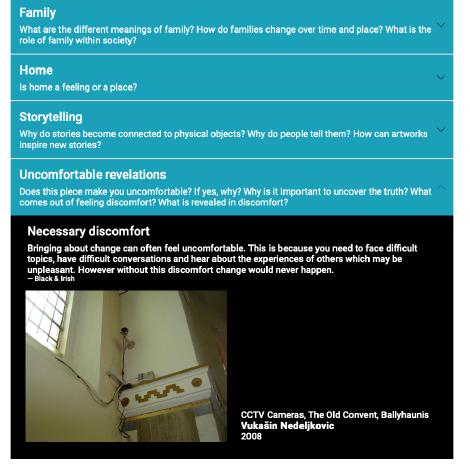
Figure 1: The organization of scripts according to themes.
In a departure from the Slow Art Videos which each focus on one artwork, IMMA requested that it should be possible to script an activity related to multiple artworks. This was motivated by an observation that scripts could be used to make contrasts or connections across artworks. Some, all, or none of the artworks associated with a script can be displayed within any script stage. This was to help the visitor orient themselves in the gallery when carrying out the script as well as support scripts being carried out off-site using only digital representations of the artworks.
Each of the stages that comprise a script can be one of four types (figures 2 and 3). A statement stage provides information or a perspective and does not request any input from the follower of the script. A question stage asks a single question, for example about one or more artworks, to which the script follower can provide a response. A help text can also optionally be associated with the question which the script follower can choose to reveal for further assistance. A multi-question stage asks a set of questions about the same artworks. The author of the script can decide whether to present the questions in a predefined sequence or to be shuffled in a random order. The multi-question stage was proposed to parallel the onsite visitor experience in which a tour guide may ask a series of questions at a specific point in the tour. The questions inside a multi-question stage can be thought of as a sub-path or off-path activity [15, 40] that the script follower can skip if they wish. A multi-question stage has an optional help text that can provide additional guidance on how to answer the questions (e.g. look slowly at the artwork from left to right) or who the questions are for (e.g. these questions are for anyone who has emigrated to another country). A story stage provides a story stem or story opener and instructions on how to continue the story. This stage was inspired by the story completion method [28], a projective technique in counselling psychology for eliciting perceptions of the topic introduced in the story stem.
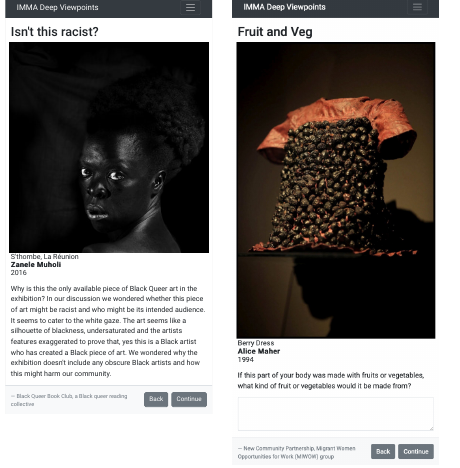
Figure 2: Statement (left) and question (right) stages used within a script.
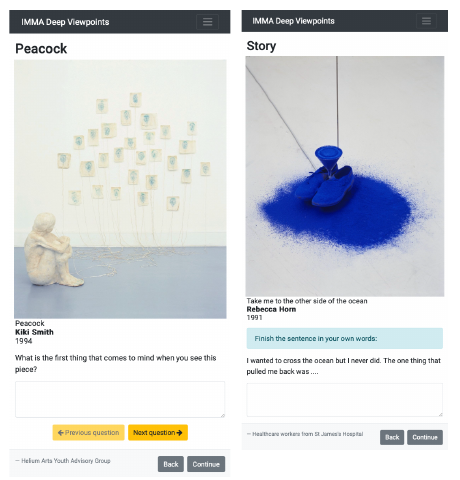
Figure 3: Multi-question (left) and story (right) stages used within a script.
Responses created by following a script can be moderated by either the script author or administrator of the app. Moderated responses to any script can be accessed from a separate page within the app. Within the design, following a script and viewing the responses of others were deliberately separated. This was influenced by Simon's [42] "me-to-we" design recommendation that museum participation is more productive if it begins with visitors interacting with museum content before widening to how the visitor's interaction can be understood within broader social contexts. The design decision was also influenced by the work of Coughlan et al [8] who found in an artwork mapping task that participants were socially influenced by tags previously added by others. To promote a divergence of responses, the design therefore encourages visitors to take part before viewing the responses of others. The responses to each script are shown in a question-and-answer interview style (figure 4). An alternative design solution would be to group together the answers to a question from different users of a script, for example, bringing together the set of responses to the question "If this part of your body was made with fruits or vegetables, what kind of fruit or vegetables would it be made from?". However, it was decided to focus on presenting complete responses to a script to encourage the reader to engage in individual perspectives rather than look across them on the question level.
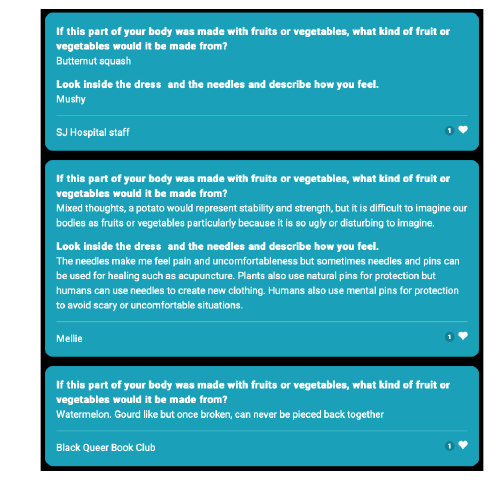
Figure 4: Responses to a script presented as a question-and-answer sequence.
Within Deep Viewpoints it is possible to respond to scripts either anonymously or logged into the application. If logged into the application, users maintain control over their contributions, and can delete or edit them at any time. An edited contribution that had previously been approved may return to the moderation queue for consideration by the script author. The application therefore provides each user control over their own contributions within the space of citizen curated content, whether authoring or responding to scripts.
Logged in users are also able to develop and share new scripts. A user can build their own personal selection of works by searching the IMMA collection (figure 5). The selected artworks can then be used in script authoring (figure 6). Each script can be associated with any number of the personally selected works. A script can be created as a sequence of stages. Zero or more artworks can be presented in each stage. Each stage type has custom fields for the types of text that it contains (e.g. questions, help text, story stem, etc.).
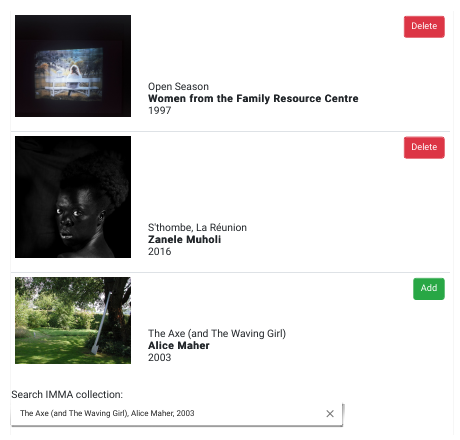
Figure 5: Selecting artworks from the IMMA collection for use in scripts.
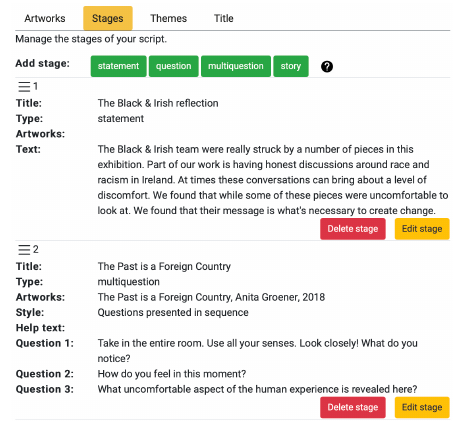
Figure 6: Authoring the stages of a script.
The Deep Viewpoints interface was developed as web app using the Angular web development framework. The citizen contributions (i.e. scripts, responses to scripts and artwork selections) and the metadata of the museum collection used in the app are stored in an underlying data infrastructure called the Linked Data Hub. Metadata of the IMMA collection was imported into the Linked Data Hub using SPARQL Anything [1] which can transform any structured data source (e.g. CSV, HTML) into RDF. Deep Viewpoints uses a custom Web API for create, read, update and delete (CRUD) operations on the Linked Data Hub. The Linked Data Hub stores the Citizen Curation data in a graph database that can be accessed using either the custom Web API or a SPARQL endpoint. Deep Viewpoints was implemented using a responsive web design (RWD) approach in order that both the following and authoring of scripts could be carried out on a variety of display sizes from computer monitors to smartphones and therefore carried out either in-gallery or at home.
4 Citizen Curation in Practice
Over a period of approximately seven months, IMMA used Deep Viewpoints in Citizen Curation workshops with several community groups mainly from sectors underrepresented among the museum's visitors. The communities were reached opportunistically either through existing museum contacts or other museum partner organizations. Pre-workshop meetings were arranged between the museum and each community to discuss the concept and negotiate their participation. The communities taking part in the workshops were not viewed as participants in an experiment. Rather, the citizen curation workshops were viewed as part of a longer-term partnership building exercise between the museum and communities. For example, many of the communities involved in the citizen curation workshops have since been involved in or led other events or initiatives at the museum. The workshops were conducted according to IMMA's code of ethics and conduct.
The workshops focused on different parts of the museum-wide exhibition The Narrow Gate of the Here and Now [18]. The exhibition explored several themes reflecting IMMA's thirty-year history, and how those themes impact on the personal, political and the planet. Themes included globalization, climate change, bodily autonomy, conflict, protest, and technological advances.
Five of the community groups participated in on-site workshops that followed a similar three-part structure. First, a member of IMMA staff gave the participants a tour of the exhibition. The staff member acted as mediator, helping the participants to develop their own responses to the artworks. The mediator made use of the types of questions typically used in Slow Looking activities such as "What do you see?". Second, the participants revisited the exhibition each with a tablet computer displaying several thematically organized scripts (figures 7 and 8). Deep Viewpoints was initially seeded with 11 scripts authored by IMMA. As the workshops progressed, the community contributed scripts from earlier workshops were also included. Third, after a refreshment break, participants developed one or more scripts of their own. Groups participating in the on-site workshops included: participants from Migrant Women - Opportunities for Work (Mi-WOW) via New Communities Partnership an organization that promotes participation, integration, and social inclusion for migrant communities; asylum seekers and staff and students from Dublin City University as part of the MELLIE Programme; Black and Irish, an advocacy group that promotes the identity of black and mixed-race Irish people; Black Queer Book Club, a reading group for people who are both LGBTQ+ and from Global Majority communities; and healthcare workers from a nearby hospital.
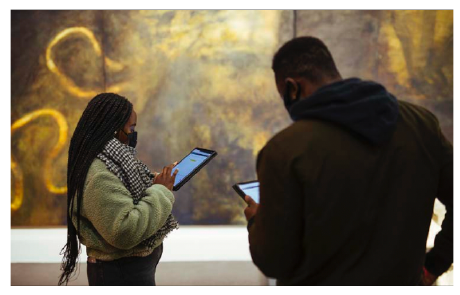
Figure 7: Members of Black and Irish take part in a Citizen Curation workshop at IMMA.
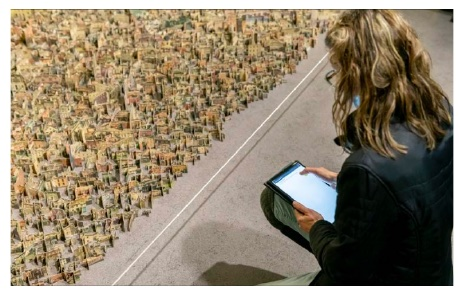
Figure 8: A member of Mi-WOW (Migrant Women - Opportunities for Work) takes part in a Citizen Curation workshop at IMMA.
In total, the communities developed 12 scripts mediating artworks from the exhibition in new ways. A script authored by migrant women focused on Alice Maher's work, Berry Dress [24]. This work, a child's dress, decorated with berries that have withered and dried over time, was first introduced to the group through a script authored by IMMA which framed an understanding of the work in terms of temporality, focusing on the passage of time and the loss of childhood innocence – "What happens to berries over time?". However, the questions the community posed focused on the meaning not of the berries but of the needles with which they are affixed to the dress; "Look inside the dress at the needles and describe how you feel." Their mediation reframed the work as political and connected it with bodily autonomy and reproductive rights.
Black and Irish authored a script titled "Necessary discomfort", with the following subheading: "Bringing about change can often feel uncomfortable. This is because you need to face difficult topics, have difficult conversations and hear about the experiences of others which may be unpleasant. However, without this discomfort change would never happen." Their script examined three artworks in succession, posing a series of challenging questions such as "What uncomfortable aspect of the human experience is revealed here?", "What does opening up and speaking about your experiences do to help others?", and "How would you feel living under constant surveillance?".
A script authored by the Black Queer Book Club, titled 'Queer Reflections', served as a critique of the exhibition, aimed primarily at the museum rather than its visitors. Their script included an artwork from an artist outside the IMMA Collection as a suggested corrective to their perceived lack of representation of 'queer joy' within the exhibition. Their role in questioning the exhibition can be seen as an example of Outsider Activists (see section 2.6) challenging the museum.
A group of Afghan refugees developed a script on the subject of "different feelings of peace". One artwork on which they focused was Dulce et Decorum est… by John Kindness [21] in which homeless Vietnam veterans are pictured on the yellow bonnet of a New York City taxi. Their script drew attention though not to the representations of the veterans, but to the taxi bonnet, which they likened to soldiers and civilians on the front line of war who are the first to feel its impact.
A script authored by healthcare workers used works from the exhibition to reflect on the pandemic and its societal impact. They selected artworks from the exhibition that could be used to illustrate lockdown, feelings of isolation and the importance of human contact.
Two groups participated remotely who were unable to physically visit the museum, authoring 7 scripts. A group of chronically ill teenagers used Deep Viewpoints from home, working with a member of museum staff over Zoom. They developed a script titled "Uncomfortably beautiful", reflecting on the "failures and beauty of the human body". Their script made associations between the selected works, the experience of being in hospital, loss of control and the importance of remembering the person not just their illness. Finally, a group of young men in custody used Deep Viewpoints working with a member of IMMA staff while in detention. They created scripts that made associations between works in the IMMA collection and art they were creating themselves. Their scripts were used to assist in the design of a physical exhibition in the museum that created a dialog between works from the collection and the art created by the young men [19].
Within Deep Viewpoints, whether the communities were working onsite or online, each of the scripts they authored were associated with the name of the community, rather than the individual names of participants. This was done to preserve the anonymity of individual participants while also enabling the perspective of each community to be promoted through their authored scripts.
Post-workshop feedback from the on-site and online participating groups was overwhelmingly positive: "It was an amazing experience, we learned a lot", "Delightful afternoon of immersion", "Had a fantastic time and was a great experience", "I had a wonderful time. I found it so thoughtful, engaging and a very relaxing but creative way to spend a couple of hours". A healthcare worker who took part and experienced the script authored by chronically ill teenagers commented that it helped in "understanding the viewpoints of my patients and colleagues".
5 Analysis of Scripts
An analysis was conducted of the 19 scripts produced during the Citizen Curation workshops and the 11 scripts initially authored by IMMA (see summary in table 1). The scripts authored by IMMA comprised on average 6.36 stages per script compared to 4.16 for the citizen curated scripts. A Mann-Whitney U test indicated that the IMMA scripts had significantly more stages than the citizen curated scripts, U=45.5, z=-2.57, p < 0.05. Although the IMMA scripts were longer, when script length was taken in account, the two sets of scripts had similar proportions of each stage type: 54% of the IMMA stages and 56% of the citizen curated stages were of type statement, with the rest requesting some form of user input. The total number of prompts for user input (i.e. counting individually each question within a multi-question stage plus the story and question stages) when taking in consideration script length were similar with 0.79 prompts per stage in the IMMA scripts and 0.68 per stage in the citizen curated scripts.
Table 1: Analysis of the IMMA and Citizen Curator scripts.
|                | IMMA N | IMMA per script | IMMA per stage | Citizen Curators N | Citizen Curators per script | Citizen Curators per stage |
|----------------|--------|-----------------|----------------|--------------------|-----------------------------|----------------------------|
| Scripts        | 11     | 1               |                | 19                 | 1                           |                            |
| Stages         | 70     | 6.36            | 1              | 79                 | 4.16                        | 1                          |
| Statement      | 38     | 3.45            | 0.54           | 44                 | 2.32                        | 0.56                       |
| Question       | 16     | 1.45            | 0.23           | 22                 | 1.16                        | 0.28                       |
| Multi-question | 14     | 1.27            | 0.20           | 12                 | 0.63                        | 0.15                       |
| Story          | 2      | 0.18            | 0.03           | 1                  | 0.05                        | 0.01                       |
| Prompts        | 55     | 5               | 0.79           | 54                 | 2.84                        | 0.68                       |
An analysis was conducted of the texts entered inside the scripts to identify episodes of interpretation and mediation. Interpretation was defined as the script author offering an interpretation to the reader. Mediation was defined as the script author assisting the reader to develop their own interpretation. A Grounded Theory approach [6] was adopted to further identify categories within the episodes of interpretation and mediation. Six thematic categories were found in both interpretation and mediation episodes: observation, signification, artist, personal, perspectival, and societal. A further category was found within the mediation utterances: a question requiring an imaginative response. Definitions of the categories with an example of each is found in table 2. Examples of each category were found in both the IMMA and citizen curated scripts. To illustrate the work of the citizen curators, all examples in table 2 are taken from their scripts.
Table 2: Types of interpretation and mediation carried out by Citizen Curators.
|                | Interpretation | Mediation |
|----------------|----------------|-----------|
| **Observation:** an observation about the artwork | the branches are so close to each-other but never touch | Take in the entire room. Use all your senses. Look closely! What do you notice? |
| **Signification:** a view on what the artwork or a component of it means or symbolizes | The grasshopper could mean kindness and compassion. | What do you think is the significance of the rope attaching her to the drawings on the wall? |
| **Artist:** a view on the artist's intent, work or background | The artist's whiteness obviously informs this | Why has the artist made the people so small and the barriers so big? |
| **Personal:** a personal view on what the artwork makes you think or feel | It is jarring that the branches are so close to each-other but never touch | How would you feel living under constant surveillance? |
| **Perspectival:** someone else's view such as that of a character in the artwork or another person | She is a temptress and succubus who lures the corruptible innocent straight woman | When might a person feel a pain like this? |
| **Societal:** a societal and/or historical perspective related to the artwork | There is a relationship to healthcare where the power over vulnerability is in your hands | Do families always protect their children appropriately? |
| **Imaginative:** an imaginative response to the artwork such as an answer to a creative question |  | If this part of your body was made with fruits or vegetables, what kind of fruit or vegetables would it be made from? |
Analysis of the structure and textual content of the scripts suggests that the support given to the community groups in a workshop format of only a few hours duration enabled them to successfully engage in a curatorial activity that combined both interpretation (i.e. giving their own perspective on the artworks) and mediation (i.e. inviting or guiding the follower of the script to interpret for themselves). Both interpretation and mediation were used to approach the artworks in several ways considering, for example, how they looked, what the meant, what the artist was trying to say, how they looked or felt from a personal or third person perspective, how they connected to the historical or societal and how they afforded opportunities to exercise the imagination.
Although the citizen authored scripts had structural similarities to those authored by the museum, incorporating both interpretation and mediation in thematically similar ways (e.g. observation, signification, artist) many of the specific associations made were novel and valid but different from the typical curatorial perspective. For example, as discussed in section 4, focusing on the importance of the needles in Alice Maher's work, Berry Dress [24] or the importance of the car bonnet in the work Dulce et Decorum est… by John Kindness [21] would not necessarily feature in a curatorial account of those artworks but were used by the communities to make an association to something that was relevant to their own concerns and experiences.
6 Discussion
Research on scripting has already demonstrated its potential to support the navigation of resources and provide structure in several educational contexts such as scientific inquiry (see section 2.4). This work has demonstrated the potential of scripted support for citizen curation. Community groups, who were not necessarily regular museum visitors, were able to curate their own responses to the exhibition after a relatively short introduction to the methods and software. Although the role of the Deep Viewpoints software cannot be disentangled from the rest of the workshop format it would appear to suggest that the concept of scripting and its realization within the process enabled productive engagement in curatorial activity. The communities were not only able to successfully take part in the activity but also responded positively to the experience.
The mixture of statements and prompts requesting user input appeared to afford a contemporary approach to curation, in which the citizen curators both offered interpretations to the reader of the script and mediated the reader's own interpretation of the artworks. Although the scripts developed in the workshops were shorter than those authored by the museum, they combined statements and invitations to respond in a proportionally similar way. The community and museum authored scripts also revealed a similar thematic variety drawing on observation, meaning, the artist, alternative perspectives, links to history and/or society and invitations to be imaginative. The scripts did though make new associations of relevance to the communities that would not necessarily feature in a curatorial account of those artworks.
The processes of interpretating artworks and mediating how others interpret them can both be thought of, at least in part, as exercises in empathy: wondering what the artwork means, what the artist is trying to say, what it says about modern society, and what prompts and questions might help a future reader to explore these issues for themselves. As quoted by Bazalgette [4] "A work of art is a bridge between one mind and another…it's a primary way in which people create and exchange meaning." The 2016 AHRC report, Understanding the Value of Arts & Culture [10], points to the importance of the arts and cultural engagement in helping to shape "reflective individuals, facilitating greater understanding of themselves and their lives, increasing empathy with respect to others, and an appreciation of the diversity of human experience and cultures". Through citizen curation we aim to explore how greater diversity can be brought to cultural engagement and the offering the museum brings to their audiences.
Further work will consider how the contributions captured through a scripted approach to citizen curation can be further embedded in the museum's offerings. For example, this could include associating the community contributions with the online artwork collection, enabling visitors to take part in scripts or view responses for an artwork they find in the collection. Citizen contributions could also be connected to a museum's internal Collection Management System (CMS), providing museum staff with insight into previous visitor responses to an artwork to inform the design of future exhibitions or education and engagement activities. Additionally, the citizen contributions could be used to enrich the physical visit, for example, by promoting their access via the visitor's own smartphone while at the museum. This would involve consideration of how the conceptual associations contained in the scripts align with the physical exhibitions and structure of the museum space [27]. These efforts would require appropriate editorial methods and technical integration for the museum to manage associations between citizen contributions and their resources, as well as ensuring citizen contributors can appropriately influence and be informed as to how their work is being used and reused within the museum.
Acknowledgments
This work has received funding from the European Union's Horizon 2020 research and innovation programme under grant agreement No 870811 (SPICE project). We wish to thank the community groups for their participation in the Citizen Curation workshops.
References
Luigi Asprino, Enrico Daga, Aldo Gangemi, and Paul Mulholland. 2023. Knowledge Graph Construction with a façade: a unified method to access heterogeneous data sources on the Web. ACM Transactions on Internet Technology, 23(1), 1-31.
Joan-Isidre Badell. 2015. Museums and social media: Catalonia as a case study. Museum Management and Curatorship, 30(3), 244-263.
David Balzer. 2015. Curationism: How curating took over the art world and everything else. Pluto Press.
Peter Bazalgette. 2017. The empathy instinct: How to create a more civil society. Hachette UK.
Mark Bernstein. 2002. Storyspace 1. In Proceedings of the thirteenth ACM conference on Hypertext and hypermedia, 172-181.
Melanie Birks and Jane Mills. 2014. Qualitative methodology: A practical guide. Qualitative Methodology, 1-288.
Orian Brook, Dave O'Brien, and Mark Taylor. 2020. Culture is bad for you. Manchester University Press.
Tim Coughlan, Laura Carletti, Gabriella Giannachi, Steve Benford, Derek McAuley, Dominic Price, Cristina Locatelli, Rebecca Sinker, and John Stack. 2015. ArtMaps: interpreting the spatial footprints of artworks. In Proceedings of the 33rd Annual ACM Conference on Human Factors in Computing Systems, 407-416.
Dorothy Cross. 1994. Saddle [Saddle, cow's udder, metal stand]. Irish Museum of Modern Art (IMMA), Republic of Ireland. https://imma.ie/collection/saddle
Geoffrey Crossick and Patrycja Kasznska. 2016. Understanding the value of arts and culture: The AHRC Cultural Value Project. UK Research and Innovation. United Kingdom
Enrico Daga, Luigi Asprino, Rossana Damiano, Marilena Daquino, Belen Diaz Agudo, Aldo Gangemi, Tsvi Kuflik, Antonio Lieto, Mark Maguire, Anna Maria Marras, Delfina Martinez Pandiani, Paul Mulholland, Silvio Peroni, Sofia Pescarin, Alan Wecker. 2022. Integrating citizen experiences in cultural heritage archives: requirements, state of the art, and challenges. ACM Journal on Computing and Cultural Heritage (JOCCH), 15(1), 1-35.
Lina Eklund. 2020. A shoe is a shoe is a shoe: Interpersonalization and meaning-making in museums–research findings and design implications. International Journal of Human–Computer Interaction, 36(16), 1503-1513.
John H. Falk and Lynn D. Dierking. 2018. Learning from museums. Rowman & Littlefield.
Adrienne Fletcher and J. Lee Moon. 2012. Current social media uses and evaluations in American museums. Museum Management and Curatorship, 27, 505-521
Richard Furuta, Frank M. Shipman III, Catherine C. Marshall, Donald Brenner, and Hao-wei Hsieh. 1997. April. Hypertext paths and the World-Wide Web: experiences with Walden's Paths. In Proceedings of the eighth ACM conference on Hypertext, 167-176.
Charlie Hargood, Mark J. Weal, and David E. Millard. 2018. The storyplaces platform: Building a web-based locative hypertext system. In Proceedings of the 29th on Hypertext and Social Media, 128-135.
Amanda Hill, Mark Kretzschmar, David Morton, and Sara Raffel. 2018. Chapter Six "Eenie Meenie Miney Mose": Using Experimental Citizen Curating To Engage Visitors With Racial Ephemera. Florida Studies Review (2018), 62.
Irish Museum of Modern Art. 2021-2023. The Narrow Gate of the Here-and-Now. Irish Museum of Modern Art (IMMA), Republic of Ireland. https://imma.ie/whats-on/the-narrow-gate-of-the-here-and-now
Irish Museum of Modern Art. 2022. The Ride Away from the Storm. Irish Museum of Modern Art (IMMA), Republic of Ireland. https://imma.ie/whats-on/the-ride-away-from-the-storm
Irish Museum of Modern Art. Slow Art Videos. https://imma.ie/learn-engage/imma-horizons/horizons-at-home/slow-art-videos-2
John Kindness. 1990. Dulce et Decorum est… [Etched painted steel]. Irish Museum of Modern Art (IMMA), Republic of Ireland. https://imma.ie/collection/dulce-et-decorum-est
Luciana Lazzeretti, Andrea Sartori, and Niccolò Innocenti. 2015. Museums and social media: the case of the Museum of Natural History of Florence. International Review on Public and Nonprofit Marketing, 12, 267-283.
Anders Sundnes Løvlie, Steve Benford, Jocelyn Spence, Timothy Wray, Christian Hviid Mortensen, Anne Olesen, Linda Rogberg, Ben Bedwell, Dimitrios Darzentas, and Annika Waern. 2019, April. The GIFT framework: Give visitors the tools to tell their own stories. In Museums and the Web.
Alice Maher. 1994. Berry Dress [Rosehips, cotton, paint, sewing pins]. Irish Museum of Modern Art (IMMA), Republic of Ireland. https://imma.ie/collection/berry-dress
Barry J. Mauer. 2017. The Citizen Curating Project Confronts the Pulse Nightclub Shooting. The St. John's University Humanities Review.
David E. Millard, Charlie Hargood, Michael O. Jewell and Mark J. Weal. 2013. Canyons, deltas and plains: towards a unified sculptural model of location-based hypertext. In Proceedings of the 24th ACM conference on hypertext and social media, 109-118.
David E. Millard and Charlie Hargood. 2017. Tiree tales: A co-operative inquiry into the poetics of location-based narrative. In Proceedings of the 28th ACM Conference on Hypertext and Social Media, 15-24.
Naomi P. Moller, Victoria Clarke, Virginia Braun, Irmgard Tischner, and Andreas Vossler. 2021. Qualitative story completion for counseling psychology research: A creative method to interrogate dominant discourses. Journal of Counseling Psychology, 68(3), 286-298.
Heather Moqtaderi. 2019. Citizen Curators: Crowdsourcing to Bridge the Academic/Public Divide. University Museums and Collections Journal 11(2), 204-210.
Paul Mulholland, Stamatina Anastopoulou, Trevor Collins, Markus Feisst, Mark Gaved, Lucinda Kerawalla, Mark Paxton, Eileen Scanlon, Mike Sharples, and Michael Wright. 2011. nQuire: technological support for personal inquiry learning. IEEE Transactions on Learning Technologies, 5(2), pp.157-169.
Museum Mediators. 2012/2014. Museum Mediators Research results. http://museummediators.eu/wp-content/uploads/2014/09/MMediatorsEurope_ResearchResults_finalReport.pdf
Museum of Modern Art (MoMA). Slow Looking. https://www.moma.org/calendar/programs/207
Jonothan Neelands, Eleonora Belfiore, Catriona Firth, Natalie Hart, Liese Perrin, Susan Brock, Dominic Holdaway, and Jane Woddis. 2015. Enriching Britain: Culture, Creativity and Growth: 2015 Report by the Warwick Commission on the Future of Cultural Value. University of Warwick.
John Peponis, Ruth Dalton, and Jean Wineman. 2003. Path, theme and narrative in open plan exhibition settings. International Space Syntax Symposium. London.
Arden Reed, A. 2017. Slow art: The experience of looking, sacred images to James Turrell. Univ of California Press.
Peter Ride. 2013. Creating #citizencurators: putting twitter into museum showcases. In Cleland, K., Fisher, L. and Harley, R. (Eds.) Proceedings of the 19th International Symposium of Electronic Art, ISEA2013, Sydney.
Karin Ryding and Jonas Fritsch. 2020. Play design as a relational strategy to intensify affective encounters in the art museum. In Proceedings of the 2020 ACM Designing Interactive Systems Conference, 681-693.
Karin Ryding, Jocelyn Spence, Anders Sundnes Løvlie, and Steve Benford. 2021. Interpersonalizing intimate museum experiences. International Journal of Human–Computer Interaction, 37(12), 1151-1172.
Mike Sharples, Eileen Scanlon, Shaaron Ainsworth, Stamatina Anastopoulou, Trevor Collins, Charles Crook, Ann Jones, Lucinda Kerawalla, Karen Littleton, Paul Mulholland and Claire O'Malley. 2015. Personal inquiry: Orchestrating science investigations within and beyond the classroom. Journal of the Learning Sciences, 24(2), pp.308-341.
Frank M. Shipman III, Richard Furuta, Donald Brenner, Chung-Chi Chung, and Hao-wei Hsieh. 1998. Using paths in the classroom: experiences and adaptations. In Proceedings of the ninth ACM conference on Hypertext and hypermedia, 267-270.
Viktor Shklovsky. 1917. Literary Theory: An Anthology, 15-21.
Nina Simon. 2010. The participatory museum. Museum 2.0.
Nina Simon. 2016. The Art of Relevance. Museum 2.0.
Jocelyn Spence, Benjamin Bedwell, Michelle Coleman, Steve Benford, Boriana N. Koleva, Matt Adams, Ju Row Farr, Nick Tandavanitj, and Anders Sundnes Løvlie. 2019, May. Seeing with new eyes: designing for in-the-wild museum gifting. In Proceedings of the 2019 CHI Conference on Human Factors in Computing Systems, 1-13.
Adam Stoneman, Jason Carvalho, Enrico Daga, Mark Maguire, and Paul Mulholland. 2021. Uncomfortable Revelations: can citizen curation widen access to museums? Museum Ireland, 28, pp.64-71.
Storyspace. http://www.eastgate.com/storyspace
Shari Tishman. 2017. Slow looking: The art and practice of learning through observation. Routledge.
Twine. https://twinery.org
Kali Tzorti. 2011. Space: Interconnecting Museology and Architecture. The Journal of Space Syntax, 2(1), 26-53.
Visual Thinking Strategies. https://vtshome.org
Sara Wajid and Rachael Minott. 2019. Detoxing and decolonising museums. In Museum activism, 25-35. Routledge.
Deirdre Wilson and Dan Sperber 2002. Relevance Theory. In G. Ward, L. Horn. Handbook of Pragmatics, Blackwell.
Fred Wilson and Howard Halle. Mining the museum. Grand Street, 44(1993): 151-172.
Do you like what you are reading? Subscribe to receive updates.
Unsubscribe anytime