
Viki LibraRy: A virtual reality library for collaborative browsing and navigation through hypertext
Authors: Shaduan Babbili, Kevin Bönisch, Yannick Heinrich, Philipp Stephan, Giuseppe Abrami, Alexander Mehler
Published in: HT '23: 34th ACM Conference on Hypertext and Social Media · DOI: 10.1145/3603163.3609079 · License: © Copyright held by the owner/author(s).
Viki LibraRy: A virtual reality library for collaborative browsing
and navigation through hypertext
Viki LibraRy: A virtual reality library for collaborative browsing
and navigation through hypertext
Shaduan Babbili∗
shaduan@babbili.de Goethe-University Frankfurt Frankfurt am Main, Germany
Kevin Bönisch∗
k.boenisch@outlook.com Goethe-University Frankfurt Frankfurt am Main, Germany
Yannick Heinrich∗
s2628277@stud.uni-frankfurt.de
Goethe-University Frankfurt Frankfurt am Main, Germany
Philipp Stephan∗
s6987634@rz.uni-frankfurt.de
Goethe-University Frankfurt Frankfurt am Main, Germany
Giuseppe Abrami abrami@em.uni-frankfurt.de
Goethe-University Frankfurt Frankfurt am Main, Germany
Alexander Mehler mehler@em.uni-frankfurt.de
Goethe-University Frankfurt Frankfurt am Main, Germany
Abstract
We present Viki LibraRy, a virtual-reality-based system for gen-erating and exploring online information as a spatial hypertext. It creates a virtual library based on Wikipedia in which Rooms are used to make data available via a RESTful backend. In these Rooms, users can browse through all articles of the corresponding Wikipedia category in the form of Books. In addition, users can access different Rooms, through virtual portals. Beyond that, the explorations can be done alone or collaboratively, using Ubiq.
Ccs Concepts
• Information systems →Collaborative and social computing systems and tools; Multimedia information systems.
Keywords
virtual reality, virtual hypertext, virtual reality simulation, virtual museum
Acm Reference Format:
Shaduan Babbili, Kevin Bönisch, Yannick Heinrich, Philipp Stephan, Giuseppe Abrami, and Alexander Mehler. 2023. Viki LibraRy: A virtual reality library for collaborative browsing and navigation through hypertext. In 34th ACM Conference on Hypertext and Social Media (HT ’23), September 4–8, 2023, Rome, Italy. ACM, New York, NY, USA, 3 pages. https://doi.org/10.1145/ 3603163.3609079
1 Motivation
Information representation and navigation is a non-trivial task, especially with regard to the application of virtual reality (VR) [3]. This challenge has been identified as a core task since early hyper-text concepts - visualising information as nodes and node-internal entities and their relationships through edges [5]. Beyond that there is the question of sharing, experiencing and exploring infor-mation. There have been approaches to collaborative hypertext
∗Authors contributed equally to this research.
(e.g., [16, 18]), but to the best of our knowledge, they are no longer used today. To address this gap, we present Viki LibraRy (Virtual Reality Wikipedia Library), which extends [8] to enable a multi-user VR environment for collaborative use and visualization of infor-mation spaces. More precisely, we visualise Wikipedia categories and the corresponding articles – however, due to its extensibility and adaptability, Viki LibraRy is not limited to Wikipedia, but exemplifies the application. In order to represent the information in a schema based format as well as to make them usable, Viki LibraRy applies the concept of a dynamic digital library in terms of spatial hypertexts [14], in which information is positioned and made accessible in Books, which are arranged in Bookshelves, in turn are arranged in Rooms (see Figure 1). Beyond that, the feature of collaborativity is intended to provide a modality for the shared and mutual reception of content.
2 Related Work
The visualization of Wikipedia is an established topic; there are ap-proaches which visualize information as graphs [2] or topological maps [4]; there are also 3D solutions to browsing Wikipedia [11], or digital reconstructions of articles [12]. Interesting is VR Forest [15], which visualises Wikipedia using a forest of animals, displaying the article of the associated animal whenever the user approaches it. There is also the approach of exploring georeferenced Wikipedia content through interactions using magic lens [7] and generating location-based audio stories [13]. While this project has similarities with Viki LibraRy, our focus is on creating a dynamic visualisa-tion that can be used collaboratively. In addition, [11] is similar to Viki LibraRy, but differs in that we emphasise collaboration with dynamic space generation.
3 Viki Library As A Hypertext System
The main idea of Viki LibraRy is to map related content to inter-connected Rooms, where the entry Room is the top category from which the visualisation starts. Thus, a link to a Room means that its content is categorically dependent on the content represented by the room from which the link starts. We are currently using spatial contiguity relations to map subcategorization relations be-tween Wikipedia categories and to spatially organize corresponding content. The information-theoretical idea behind this is that what is informationally dependent should be represented in a spatially
(a) Excerpt from Viki LibraRy: Reading the Wikipedia article of “Rome” as a Book together with another user. In the background stairs to other Rooms as well as other Rooms on the same floor are shown.
Viki LibraRy
Ubiq
Room
Bookshelve
Book
õ Backend Ô ®
l
² Users
use
Ü
utilizes
join create
{...}
(b) The basic architecture of Viki LibraRy showcasing the flexible RESTful backend connectivity and its representation as Rooms, Bookshelves and Books.
Figure 1: A glimpse into a virtual library generated with Viki LibraRy (a) as well as the architecture including the RESTful backend (b).
dependent way that is easy for users to memorize since spatial information is well memorizable for humans [17].
Viki LibraRy generates hypertexts in dynamic Rooms in which users can use portals1 to navigate through the content classified by the respective categories and thereby gain access to new Rooms. To facilitate this, an interactive minimap is provided to the users to help them traversing through the current Room. In order to dy-namically adjust each Room to the category that it is representing, we implemented an algorithm (see simplified Algorithm 1) that creates a Room by the given data: Each article within the category is represented as a Book, which is placed in a Bookshelve. In addition, subcategories are represented as connections to other Rooms and are being implemented as portals. This creates a cluster of Rooms, where each Room can be accessed by a portal from its parent category. On top of the generated rooms, based on the sub-categories, random empty rooms are generated and arranged with different items to lighten them up and make them more pleasant to use.
Besides, Viki LibraRy enables collaborative use of hypertext us-ing Ubiq [6], as already demonstrated in Va.Si.Li-Lab [1, 10] wherein users are represented through avatars and thus communicate with each other and interact mutually with virtual information objects (Figure 1).
Viki LibraRy is a generic collaborative framework for use cases in VR-based hypertext systems. Due to the interface-based RESTful backend, other data sources can be used as well: (1) We could visualise Twitter where (re-)tweets are organised into Bookshelves and Rooms contain hashtags so that neighbouring Rooms map similar topics. (2) Discord could be integrated so that individual chat servers present Rooms with Bookshelves as individual channels and Books as individual conversations in threads. (3) Instagram can be mapped in analogy to Twitter so that picture galleries are
1This is a similar approach to using portals in virtual realities as in [9]
Algorithm 1 Generation of Rooms, Bookshelves and Books.
Require: 𝐶𝑎𝑡𝑒𝑔𝑜𝑟𝑦𝑤𝑝𝐶𝑎𝑡𝑒𝑔𝑜𝑟𝑦 ⊲Selected by user 𝑟𝑜𝑜𝑚𝐿𝑖𝑠𝑡= generateRoom(𝑤𝑝𝐶𝑎𝑡𝑒𝑔𝑜𝑟𝑦)
arrangeRooms(𝑟𝑜𝑜𝑚𝐿𝑖𝑠𝑡) ⊲Randomized arrangement of rooms in horizontal and vertical directions, respectively; creation of pseudo-rooms for better visual representation
function generateRoom(wpCategory)
𝐿𝑖𝑠𝑡< 𝐶𝑎𝑡𝑒𝑔𝑜𝑟𝑦> 𝑐𝑎𝑡𝑒𝑔𝑜𝑟𝑦𝐿𝑖𝑠𝑡
= selectSubCategories(𝑤𝑝𝐶𝑎𝑡𝑒𝑔𝑜𝑟𝑦) ⊲From backend for all 𝑐∈𝑐𝑎𝑡𝑒𝑔𝑜𝑟𝑦𝐿𝑖𝑠𝑡do
𝑟𝑜𝑜𝑚= generateRoom(𝑐, 𝑤𝑝𝐶𝑎𝑡𝑒𝑔𝑜𝑟𝑦) 𝑏𝑜𝑜𝑘𝑠= generateBooks(𝑐, 𝑟𝑜𝑜𝑚) generateShelves(𝑏𝑜𝑜𝑘𝑠) ⊲For grouping books 𝑟𝑜𝑜𝑚→𝑟𝑜𝑜𝑚𝐿𝑖𝑠𝑡 end for return 𝑟𝑜𝑜𝑚𝐿𝑖𝑠𝑡 end function
also adopted. To ensure reuse of Viki LibraRy, all source code is available on GitHub2 under the AGPL license as; a video is available on YouTube3 for enhanced demonstration.
ETHICAL ASPECTS
The results of this paper have been prepared taking into account ethical aspects. Moreover, the development of Viki LibraRy is based on the generation and visualization of content based on Wikipedia and other information sources as well as the interaction with these. Since this prototype does not evaluate the respective input information from Wikipedia and does not apply any filters, it
2https://github.com/texttechnologylab/Viki-LibraRy 3https://youtu.be/jEzctkv2MXo
Viki LibraRy HT ’23, September 4–8, 2023, Rome, Italy
is possible that users could experience a negative effect from the information presented via Viki LibraRy.
References
[1] Giuseppe Abrami, Alexander Mehler, Mevlüt Bagci, Patrick Schrottenbacher,
Alexander Henlein, Christian Spiekermann, Juliane Engel, and Jakob Schreiber. 2023. Va.Si.Li-Lab as a collaborative multi-user annotation tool in virtual reality and its potential fields of application. In 33rd ACM Conference on Hypertext and Social Media (HT ’23), (Rome, Italy, September 4–8, 2023). ACM, New York, NY, USA. https://doi.org/10.1145/3603163.3609076 [2] Ron Bekkerman and Olga Donin. 2017. Visualizing Wikipedia for Interactive
Exploration. In Proceedings of the ACM SIGKDD Workshop on Interactive Data Exploration and Analytics. 11–17. [3] Verena Biener, Eyal Ofek, Michel Pahud, Per Ola Kristensson, and Jens Grubert.
Extended Reality for Knowledge Work in Everyday Environments. Springer International Publishing, Cham, 21–56. https://doi.org/10.1007/978-3-031-05804- 22 [4] Bryan Chan, Leslie Wu, Justin Talbot, Mike Cammarano, and Pat Hanrahan. 2008.
Vispedia: Interactive Visual Exploration of Wikipedia Data via Search-Based Integration. IEEE Transactions on Visualization and Computer Graphics 14 (2008). https://doi.org/10.1109/TVCG.2008.178 [5] J. Conklin. 1987. Hypertext: An Introduction and Survey. Computer 20, 9 (1987),
17–41. https://doi.org/10.1109/MC.1987.1663693 [6] Sebastian J Friston, Ben J Congdon, David Swapp, Lisa Izzouzi, Klara Brandstätter,
Daniel Archer, Otto Olkkonen, Felix Johannes Thiel, and Anthony Steed. 2021. Ubiq: A System to Build Flexible Social Virtual Reality Experiences. In Proceedings of the 27th ACM Symposium on Virtual Reality Software and Technology (Osaka, Japan) (VRST ’21), Yuichi Itoh, Kazuki Takashima, Parinya Punpongsanon, Misha Sra, Kazuyuki Fujita, Shigeo Yoshida, and Piumsomboon. Tham (Eds.). Association for Computing Machinery, New York, NY, USA, Article 6, 11 pages. https: //doi.org/10.1145/3489849.3489871 [7] Brent Hecht, Michael Rohs, Johannes Schöning, and Antonio Krüger. 2007. Wik-Eye – Using Magic Lenses to Explore Georeferenced Wikipedia Content. In Proceedings of the 3rd International Workshop on Pervasive Mobile Interaction Devices (PERMID). [8] Attila Kett, Giuseppe Abrami, Alexander Mehler, and Christian Spiekermann.
Resources2city Explorer: A System for Generating Interactive Walkable Virtual Cities out of File Systems. In Adjunct Proceedings of the 31st Annual ACM Symposium on User Interface Software and Technology (Berlin, Germany) (UIST ’18 Adjunct). Association for Computing Machinery, New York, NY, USA, 123–125. https://doi.org/10.1145/3266037.3266122 [9] Alexander Mehler, Giuseppe Abrami, Christian Spiekermann, and Matthias Jos-tock. 2018. VAnnotatoR: A Framework for Generating Multimodal Hypertexts. In Proceedings of the 29th ACM Conference on Hypertext and Social Media (Baltimore, Maryland) (Proceedings of the 29th ACM Conference on Hypertext and Social Media (HT ’18)). ACM, New York, NY, USA. https://doi.org/10.1145/3209542.3209572 [10] Alexander Mehler, Mevlüt Bagci, Alexander Henlein, Giuseppe Abrami, Chris-tian Spiekermann, Patrick Schrottenbacher, Maxim Konca, Andy Lücking, Ju-liane Engel, Marc Quintino, Jakob Schreiber, Kevin Saukel, and Olga Zlatkin-Troitschanskaia. 2023. A Multimodal Data Model for Simulation-Based Learn-ing with Va.Si.Li-Lab. In Digital Human Modeling and Applications in Health, Safety, Ergonomics and Risk Management, Vincent G. Duffy (Ed.). Springer Nature Switzerland, Cham, 539–565. https://doi.org/10.1007/978-3-031-35741-139 [11] Eoin O’Brien, Baptiste Jacquouton, Antoine Moineau, and Abraham G. Campbell.
Wikipedia in Virtual Reality and HowText-Based Media Can Be Explore in Virtual Reality. In Proceedings of the 2019 International Conference on Arti-ficial Intelligence and Advanced Manufacturing (Dublin, Ireland) (AIAM 2019). Association for Computing Machinery, New York, NY, USA, Article 70, 9 pages. https://doi.org/10.1145/3358331.3358401 [12] Bryan C. Russell, Ricardo Martin-Brualla, Daniel J. Butler, Steven M. Seitz, and
Luke Zettlemoyer. 2013. 3D Wikipedia: Using Online Text to Automatically Label and Navigate Reconstructed Geometry. ACM Trans. Graph. 32, 6, Article 193 (nov 2013), 10 pages. https://doi.org/10.1145/2508363.2508425 [13] Johannes Schöning, Brent Hecht, Michael Rohs, Nicole Starosielski, et al. 2007.
WikEar - Automatically Generated Location-Based Audio Stories between Public City Maps. adjunct Proc. of Ubicomp’07 (2007), 128–131. [14] Frank M. Shipman and Catherine C. Marshall. 1999. Spatial Hypertext: An
Alternative to Navigational and Semantic Links. Comput. Surveys 31, 4 (1999). [15] Boris Smus. 2016. Browsing Wikipedia in VR. https://smus.com/wikipedia-vr/
accessed: 2023-05-31. [16] Norbert A. Streitz, Jörg M. Haake, Jörg Hannemann, Andreas C. Lemke, Wolf-gang Schuler, Helge Schütt, and Manfred Thüring. 1992. SEPIA: a coopera-tive hypermedia authoring environment. In European Conference on Hypertext. https://doi.org/10.1145/168466.168479 [17] Barbara Tversky. 2009. Spatial cognition: Embodied and situated. Cambridge
University Press, 201–216. https://doi.org/10.1017/CBO9780511816826.012
[18] Uffe Kock Wiil. 1992. Issues in the design of EHTS: a multiuser hypertext system
for collaboration. Proceedings of the Twenty-Fifth Hawaii International Conference on System Sciences ii, 2 (1992), 629–639. https://doi.org/10.1109/HICSS.1992. 183314
Figures and table reproductions
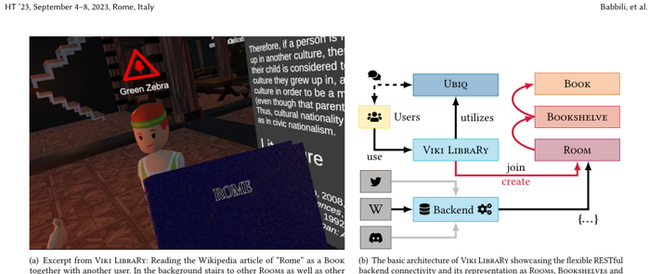
Figure 1: source-region reproduction from the supplied PDF.
Do you like what you are reading? Subscribe to receive updates.
Unsubscribe anytime